Content Menu
● What Is the Average Cost to Print a Book?
● The Main Factors That Determine Book Printing Cost
>> 1. Book Quantity and Production Scale
>> 2. Digital Printing vs. Offset Printing
>>> Digital book printing
>>> Offset book printing
>> 3. Page Count and Paper Consumption
>> 4. Book Size and Trim Format
>> 5. Interior Color: Black and White vs. Full Color
>> 6. Paper Type, Weight, and Finish
>> 7. Binding Style and Construction
>>> Saddle-stitch binding
>>> Perfect binding
>>> Spiral or wire-o binding
>>> Hardcover or case binding
● Special Finishes That Add Cost—and Brand Value
● Hidden Costs Beyond the Printing Quote
● How to Request an Accurate Book Printing Quote
>> Book Printing RFQ Checklist
● Print-Ready Files: Avoid Expensive Production Delays
>> Essential File-Preparation Checks
● Three Cost-Control Strategies That Protect Quality
>> 1. Quote Multiple Quantity Tiers
>> 2. Simplify the Interior Before Downgrading the Cover
>> 3. Choose the Right Manufacturing Partner
● Why Custom Book Printing Supports Brand Growth
● Conclusion
● FAQ
>> 1. How much does it cost to print 100 books?
>> 2. Is it cheaper to print books in China?
>> 3. What is the cheapest way to print a book?
>> 4. Does page count affect book printing cost?
>> 5. Is hardcover book printing more expensive than paperback printing?
>> 6. Should I use offset or digital printing for my book?
>> 7. What file format should I send to a book printer?
● References
How much does it cost to print a book? The short answer is: it depends on the book's specifications, order quantity, printing method, materials, finishing, and shipping destination. A simple black-and-white paperback may be produced at a relatively low unit cost, while a full-color hardcover children's book, art book, pop-up book, or premium branded publication can cost substantially more.
For brands, publishers, wholesalers, educators, and self-publishing businesses, the key is not simply finding the lowest book printing price. The better objective is to control the total landed cost while protecting the reading experience, brand presentation, durability, and expected retail margin.
At Shenzhen XingKun Packing Products Co., Ltd. (XingKun), we work with overseas customers on OEM and ODM printed-book projects, including children's books, comic books, activity books, board books, coloring books, cookbooks, art books, spiral-bound books, brochures, and hardcover publications. From a factory perspective, the most accurate quote always starts with a clear specification—not just a page count.
This guide explains the real factors behind custom book printing cost, how to compare printing quotes properly, and how to lower your cost without making the finished book feel cheap.
What Is the Average Cost to Print a Book?
There is no universal per-book price because every project has a different physical structure. However, as a planning reference, the following ranges can help buyers understand how book format and production choices affect cost.
| Book Type | Typical Specifications | General Cost Position | Main Cost Drivers |
| Black-and-white paperback | Text-heavy interior, standard paper, perfect binding | Lower | Page count, quantity, trim size |
| Full-color paperback | Color images or illustrations, coated interior paper | Medium | Color coverage, paper type, pages |
| Saddle-stitched booklet | Lower page count, stapled binding | Low to medium | Page count, cover stock, quantity |
| Spiral-bound workbook | Wire or plastic coil, functional pages | Medium | Binding hardware, drilling, page count |
| Hardcover book | Case binding, printed cover, endpapers | Medium to high | Board, cover finish, page count, binding |
| Children’s board book | Thick board pages, rounded corners, full color | High | Board construction, die cutting, safety requirements |
| Art book or photo book | Full-color images, premium paper, hardcover options | High | Image reproduction, paper, finishes |
| Pop-up or interactive book | Paper engineering and hand assembly | Very high | Structural development, manual labor, components |
As a general benchmark from self-publishing and print-on-demand market comparisons, a 200-page black-and-white paperback may fall around the mid-single-digit dollar range per copy through certain on-demand platforms, while full-color children's books cost more because color printing and heavier materials add substantially to manufacturing cost. These figures should be treated as market examples, not as an OEM factory quotation. [books]
For custom manufacturing, a supplier will normally quote after confirming:
- Finished book size
- Total page count
- Interior printing colors
- Paper stock and thickness
- Cover type
- Binding method
- Finishing requirements
- Order quantity
- Packaging method
- Delivery country and trade terms
A quote without these details is only an estimate. A professional book printer should explain which decisions are increasing the price and which changes could reduce it.
The Main Factors That Determine Book Printing Cost
1. Book Quantity and Production Scale
Quantity is one of the most important factors in book printing pricing.
Every print job includes fixed production work. This may include prepress preparation, file inspection, color setup, plate making for offset printing, machine setup, proofing, and quality checks. When you produce more copies, those fixed costs are spread over more units.
That is why a 3,000-copy order may have a much lower unit price than a 100-copy order, even though the total invoice is higher.
For example:
| Quantity | Setup Cost Per Copy | Material Cost Per Copy | Typical Unit-Cost Trend |
| 100 copies | High | Standard | Highest |
| 500 copies | Moderate | Standard | Lower |
| 1,000 copies | Lower | Standard | More competitive |
| 3,000+ copies | Low | Standard | Often best for offset economics |
Industry guidance commonly identifies digital printing as suitable for shorter runs and offset printing as more economical at higher volumes because setup costs are distributed across more copies. One commercial-printing source places the transition toward offset cost efficiency at around 1,500 copies, although the exact crossover depends on book specifications, press capacity, local labor, and logistics. [coreprintsolutions.thomsonreuters]
Expert advice: Do not choose quantity only by chasing the lowest unit cost. Order volume should match your sales forecast, storage capacity, cash flow, and product life cycle. A low-cost book becomes expensive if it sits unsold in a warehouse.
2. Digital Printing vs. Offset Printing
The printing method has a direct effect on both cost and flexibility.
Digital book printing
Digital printing is often a strong option for:
- Small quantities
- Pilot launches
- Author copies
- Event books
- Market tests
- Personalized editions
- Fast replenishment needs
The advantage is low setup cost. You can usually produce a smaller run without the large initial preparation associated with traditional offset printing.
However, the unit price often remains relatively stable as quantity increases. For a large commercial order, digital printing may become less economical than offset.
Offset book printing
Offset printing is usually more appropriate for:
- Wholesale orders
- Retail distribution
- Publishers with established demand
- Large educational programs
- Full-color illustrated books
- Brand campaigns requiring consistent color
- High-volume book series
Offset printing requires more setup, but it can deliver a lower unit cost at volume. It is also widely used for stable, high-quality reproduction across a long production run. Multiple printing-industry sources note that higher quantities lower the per-unit cost because setup expenses are spread across more printed copies. [bnbindery]
Practical rule: Request both digital and offset options if your quantity is near the transition point. Comparing both methods can reveal whether increasing the order by a few hundred copies improves your total commercial result.
3. Page Count and Paper Consumption
More pages mean more paper, more printing impressions, more folding, more binding material, more production time, and more shipping weight.
This makes page count one of the most direct book-cost variables.
A 32-page promotional booklet and a 256-page paperback may have the same trim size and cover finish, but they are completely different production jobs. The thicker book consumes more materials and may require a different binding structure.
Page count also affects:
- Spine thickness
- Carton quantity
- Freight cost
- Shelf appearance
- Binding strength
- Reader comfort
- Retail postage in some markets
For text-led books, reducing unnecessary blank pages, duplicated content, or inefficient layout can lower cost. But do not reduce page count at the expense of readability. Very small type, narrow margins, and crowded pages may save paper while damaging the product's perceived value.
Better approach: Optimize the manuscript and layout before printing. Good editorial planning lowers cost more safely than simply choosing thinner paper.
4. Book Size and Trim Format
The physical dimensions of a book affect paper yield, production efficiency, packaging, and freight.
Common book sizes such as 5.5 × 8.5 inches, 6 × 9 inches, A5, A4, or square formats are often easier to manufacture efficiently because they align better with standard production workflows. Custom sizes can still be produced, but unusual dimensions may create more paper waste or require special cutting plans.
A larger trim size can increase cost because it uses more paper per page. It may also increase the book's weight and shipping volume.
However, bigger is not always more expensive in a straightforward way. A larger book may allow fewer pages for the same content if the layout is redesigned properly. That is why you should evaluate total paper area, page count, and reading purpose together.
| Book Format | Best Use | Cost Consideration |
| 6 × 9 inch / A5 | Novels, manuals, business books | Efficient, familiar, portable |
| A4 / letter size | Workbooks, catalogs, training manuals | More paper and higher freight weight |
| Square book | Children’s books, photo books, brand books | Attractive but may reduce paper efficiency |
| Landscape book | Portfolios, art books, photo books | May require special layout and packaging |
| Custom size | Premium branded projects | Can add waste, setup complexity, and lead time |
5. Interior Color: Black and White vs. Full Color
The difference between black-and-white printing and full-color printing can be substantial.
A text-only paperback may use black ink for the interior. This is generally the most cost-efficient option for novels, manuals, reference books, and academic-style publications.
A full-color book uses cyan, magenta, yellow, and black inks—commonly called CMYK—to reproduce photos, illustrations, charts, branded graphics, and color-coded educational content.
Full color is often appropriate for:
- Children's books
- Comic books
- Art books
- Cookbooks
- Catalogs
- Product manuals with diagrams
- Photography books
- Activity books
- Corporate brand books
The cost increase is not only about ink. Full-color books often need better image preparation, color management, coated paper, more careful proofing, and tighter quality control.
Important distinction: A book with a full-color cover and black-and-white interior is much less expensive than a book with full color on every interior page. If color is important only for selected pages, ask your printer whether a mixed interior configuration is feasible.
6. Paper Type, Weight, and Finish
Paper is a core material cost. It also determines how readers perceive the book.
The right stock depends on the product category, not simply on budget.
| Paper Choice | Typical Use | Buyer Consideration |
| Uncoated woodfree paper | Novels, journals, workbooks | Comfortable reading and writing surface |
| Gloss coated paper | Photo-heavy books, catalogs | Strong color vibrancy, reflective surface |
| Matte coated paper | Art books, premium catalogs | Softer appearance and lower glare |
| Cream book paper | Fiction, literary books | Traditional reading feel |
| Thick board | Board books, premium covers | High durability, higher cost |
| Recycled or certified paper | Sustainability-led brands | Requires supply-chain verification |
Paper weight is often expressed in GSM, or grams per square meter. Heavier paper can improve opacity, durability, and perceived quality, but it also raises material and freight costs.
For example, a children's activity book may need a heavier interior stock to reduce show-through when children use markers. A novel usually performs well on lighter uncoated paper because the buyer values portability and reading comfort.
For sustainability claims, buyers should ask not only whether paper is "eco-friendly," but whether traceability documentation can support the claim. The Forest Stewardship Council explains that certification supports a chain of custody that traces materials back to responsibly managed sources. [us.fsc]
Factory perspective: We recommend selecting paper according to the actual use case. A premium paper choice should solve a functional or brand problem—not exist only because it sounds more expensive.
7. Binding Style and Construction
Binding affects durability, appearance, reader usability, and production cost.
Saddle-stitch binding
Saddle stitching uses staples along the fold. It is commonly used for brochures, magazines, instruction booklets, catalogs, and shorter activity books.
Advantages:
- Economical
- Fast to produce
- Opens relatively flat
- Good for lower page counts
Limitations:
- Not suitable for thick books
- Page count typically needs to follow print-signature requirements
- Less premium than hardcover or perfect binding
Perfect binding
Perfect binding uses adhesive to attach pages to a wraparound soft cover. It is common for paperbacks, catalogs, manuals, and trade books.
Advantages:
- Professional spine
- Suitable for higher page counts
- Cost-effective for many commercial books
Limitations:
- Binding quality depends on paper, glue, spine preparation, and process control
- Very thick or coated-paper books may need special evaluation
Spiral or wire-o binding
Spiral binding is practical for workbooks, notebooks, recipe books, training manuals, planners, and reference materials.
Advantages:
- Pages turn easily
- Lays flat for writing or viewing
- Functional for repeated use
Limitations:
- Higher component and assembly cost than simple saddle stitching
- Less suitable for traditional bookstore presentation
Hardcover or case binding
Hardcover books use rigid board covers and are commonly chosen for premium editions, children's books, art books, gift books, corporate histories, and collector products.
Advantages:
- Strong perceived value
- Durable
- Premium unboxing experience
- Supports special finishes and dust jackets
Limitations:
- Higher material and labor cost
- More production steps
- Larger shipping weight and volume
Commercial print guidance consistently identifies hardcover construction, premium materials, and special finishes as higher-cost options compared with basic saddle-stitched or paperback formats. [footeprinting]
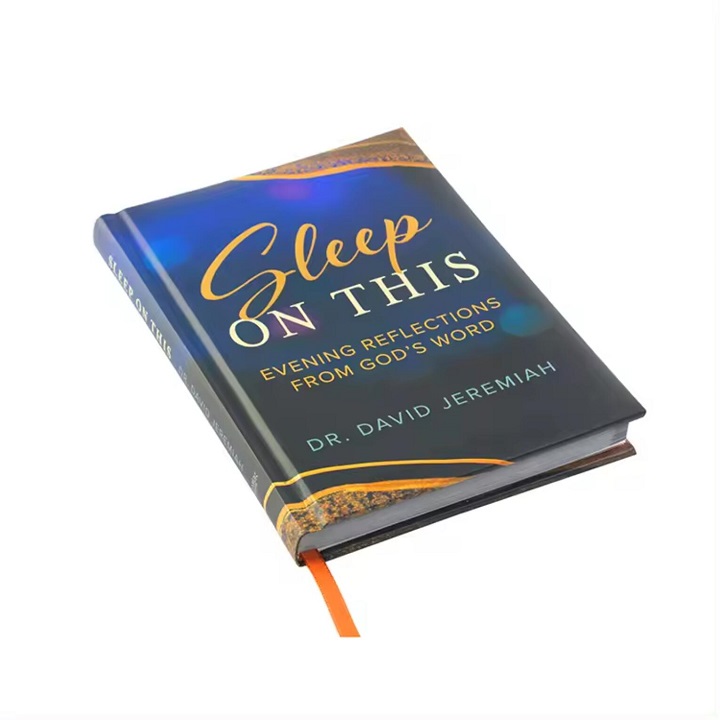
Special Finishes That Add Cost—and Brand Value
Finishing turns a printed book into a branded physical product. It can also increase both cost and lead time.
Common options include:
- Matte or gloss lamination
- Soft-touch lamination
- Spot UV
- Foil stamping
- Embossing
- Debossing
- Die-cut windows
- Rounded corners
- Gilded edges
- Ribbon bookmarks
- Elastic bands
- Dust jackets
- Slipcases
- Shrink wrapping
A premium finish should support a clear commercial purpose. For example:
- Soft-touch lamination can make a premium business book feel more tactile.
- Foil stamping can highlight a luxury logo or title.
- Spot UV can create contrast on a matte cover.
- Rounded corners can be a practical choice for children's books.
- Shrink wrapping can protect retail-ready books during shipping and shelf handling.
The mistake is adding too many finishes to every project. Each extra process can add setup time, spoilage risk, manual labor, and inspection requirements.
Use finishes strategically: Allocate budget to the elements customers actually see, touch, and remember—usually the cover, edges, opening experience, and product protection.
Hidden Costs Beyond the Printing Quote
A book's manufacturing price is not its total business cost. Buyers should calculate the landed cost, which includes all costs needed to receive sellable inventory.
A more complete formula is: Landed Cost Per Book=(Manufacturing+Tooling+Proofs+Packaging+Freight+Duty+Local Handling) /Sellable Units
Potential costs that buyers often overlook include:
- Design and typesetting
- Illustration or photography
- ISBN and publishing administration
- Prepress file repair
- Physical sample or prototype charges
- Color proofing
- Freight from the factory
- Customs duties and import taxes
- Warehousing
- Fulfillment packing
- Damage allowance
- Retailer margin
- Returns
- Marketing and launch costs
For books shipped within the United States, USPS Media Mail may be relevant for eligible products. USPS states that Media Mail covers qualifying books of at least eight pages and is subject to content restrictions and inspection. [usps]
For international OEM buyers, freight planning matters even more. A hardcover art book with heavy coated paper may look excellent, but its weight can significantly affect sea freight, air freight, storage, and direct-to-customer delivery costs.
How to Request an Accurate Book Printing Quote
The fastest way to receive a useful quotation is to prepare a clear request for quotation, or RFQ.
Book Printing RFQ Checklist
Send the following information to your supplier:
1. Book type: Paperback, hardcover, board book, comic book, workbook, catalog, booklet, or other format.
2. Finished size: For example, A5, 6 × 9 inches, 8.5 × 11 inches, or a custom size.
3. Page count: Include cover and interior pages separately if possible.
4. Printing colors: Black-and-white, full color, or a mixed configuration.
5. Paper specification: Interior paper, cover stock, GSM, coated or uncoated finish.
6. Binding method: Saddle stitch, perfect binding, spiral binding, sewn binding, case binding, or board-book construction.
7. Cover requirements: Softcover, hardcover, dust jacket, foil, embossing, lamination, and other finishes.
8. Quantity: Ask for tiered pricing, such as 500, 1,000, 3,000, and 5,000 copies.
9. Packaging: Bulk cartons, individual shrink wrapping, retail boxes, barcode labels, or custom inserts.
10. Delivery destination: Country, postal code, preferred shipping method, and required delivery date.
11. Quality requirements: Color standards, safety testing, material certifications, and inspection expectations.
12. Artwork status: Print-ready PDF, design in progress, or need for file review.
A high-quality printer should use this information to give you a quote that is transparent and comparable.
Print-Ready Files: Avoid Expensive Production Delays
Artwork problems can create avoidable cost. Common issues include low-resolution images, missing bleed, unembedded fonts, incorrect page order, unexpected RGB colors, and poor spine calculations.
Before approving production, ask for a digital proof and, for high-value projects, consider a physical sample.
Adobe recommends using PDF/X-4 when converting files to a press-ready PDF in Acrobat Pro. This workflow is intended to create a high-resolution file suitable for professional printing. [helpx.adobe]
Essential File-Preparation Checks
- Export pages as single pages unless your printer specifically requests spreads.
- Use the printer's template for cover width and spine size.
- Include bleed for artwork that extends to the edge.
- Keep important text away from trim and fold lines.
- Use high-resolution images.
- Embed fonts or convert them according to the printer's instructions.
- Confirm CMYK or approved color settings.
- Check page count, pagination, and blank pages.
- Review all text before approving a proof.
Expert insight: Proofing is not a formality. It is the final opportunity to check text, image placement, colors, die lines, trim marks, and binding direction before materials enter production.
Three Cost-Control Strategies That Protect Quality
1. Quote Multiple Quantity Tiers
Request prices for at least three quantities. For example:
- 500 copies
- 1,000 copies
- 3,000 copies
Then compare:
- Unit cost
- Total cash investment
- Estimated freight
- Storage requirement
- Expected sales period
- Potential retail margin
This approach helps you identify the point where additional quantity creates meaningful savings without creating unnecessary inventory risk.
2. Simplify the Interior Before Downgrading the Cover
If budget is limited, protect the cover experience first. A well-designed cover is what buyers see online, on shelves, and at unboxing.
Instead of removing all premium elements, consider:
- Keeping a strong laminated cover
- Reducing unnecessary full-color interior pages
- Choosing a standard trim size
- Using a simpler endpaper option
- Removing nonessential inserts
- Selecting an efficient paper stock
This can preserve brand perception while lowering production complexity.
3. Choose the Right Manufacturing Partner
The lowest quote is not always the lowest total cost.
A dependable supplier should be able to explain:
- Why a certain binding is recommended
- Which paper weight fits your purpose
- How page count affects the spine
- Whether your artwork is production-ready
- What finishing choices add risk or cost
- How books will be packed for export
- Which quality checks will happen before shipment
For export projects, communication, sample approval, pre-production confirmation, and packaging design can prevent expensive rework later.
Why Custom Book Printing Supports Brand Growth
A custom printed book can do more than contain information. It can function as a product, a marketing asset, a training tool, a collector item, or a premium part of a brand ecosystem.
Examples include:
- A cosmetics brand creating an illustrated product-story book.
- An educational company producing activity books and flash cards.
- A game publisher bundling rulebooks with playing cards or jigsaw puzzles.
- A restaurant group printing premium cookbooks for retail sale.
- A corporate brand producing annual reports, onboarding manuals, or event books.
- A children's brand developing a board-book series with matching packaging.
At XingKun, the available custom book categories include hardcover books, paperback books, board books, pop-up books, children's books, comic books, activity books, art books, cookbooks, spiral-bound books, and booklets or brochures. The company also describes support for custom material choices, printing, binding, and finishing options for different project requirements. [xkdisplay]
For companies sourcing from China, combining book manufacturing with related printed products—such as custom boxes, stickers, inserts, cards, or retail packaging—may also simplify supplier coordination and create a more consistent branded presentation.
Conclusion
The cost to print a book is shaped by the decisions you make before production begins: quantity, printing method, page count, color, paper, binding, finishing, packaging, and freight. There is no single "average price" that applies to every project, because a 200-page black-and-white paperback is not comparable to a full-color hardcover art book or a children's board book.
The smartest purchasing decision is to balance unit cost with customer value. Choose materials that match the book's purpose, select a print run that fits your demand forecast, and work with a supplier that can explain every specification clearly.
If you are planning a custom book project, XingKun can help evaluate your artwork, recommend appropriate materials and binding, provide quantity-based pricing, and develop OEM or ODM printing solutions for international brands, publishers, wholesalers, and product manufacturers. Request a detailed custom book printing quote with your size, page count, quantity, and finish requirements to begin.
FAQ
1. How much does it cost to print 100 books?
Printing 100 books usually costs more per copy than larger orders because setup, prepress, and machine preparation are distributed across fewer units. The exact cost depends on the trim size, page count, paper, color configuration, binding, and whether the books are digitally printed or offset printed. Digital printing is commonly the practical option for smaller runs.
2. Is it cheaper to print books in China?
It can be more cost-effective to print books in China, especially for medium- and high-volume custom projects, because of manufacturing scale and the ability to combine printing, binding, finishing, and packaging in one supply chain. However, buyers must include samples, freight, duties, customs clearance, inventory, and delivery time in the total landed-cost calculation.
3. What is the cheapest way to print a book?
For many projects, the most economical format is a standard-size black-and-white paperback with uncoated interior paper, a simple color cover, perfect binding, minimal special finishing, and a quantity large enough to reduce the unit price. Saddle-stitched binding can be even less expensive for short booklets with suitable page counts.
4. Does page count affect book printing cost?
Yes. More pages require more paper, printing time, folding, binding capacity, and shipping weight. Page count can also increase spine thickness and affect packaging. It is one of the most important variables in a custom book printing quotation.
5. Is hardcover book printing more expensive than paperback printing?
Yes, in most cases. Hardcover books require rigid board covers, additional assembly, more materials, and often more finishing processes. They usually have a higher manufacturing and freight cost than paperbacks, but they can provide stronger durability, premium shelf presence, and a higher perceived retail value.
6. Should I use offset or digital printing for my book?
Use digital printing for small runs, prototypes, quick reorders, and market testing. Consider offset printing for larger quantities where setup cost can be spread across more units. The best choice depends on your quantity, deadline, color requirements, budget, and expected reorder volume. [coreprintsolutions.thomsonreuters]
7. What file format should I send to a book printer?
Most professional printers prefer a print-ready PDF. Confirm the printer's template, bleed, color requirements, page format, and cover-spine calculation before exporting. Adobe's press-ready PDF workflow includes PDF/X-4 as an option for professional print preparation. [helpx.adobe]
References
1. XingKun. "[Custom Printing Books Manufacturer – XINGKUN]." Product and service information covering custom printed book categories, printing, binding, material selection, finishing, and OEM/ODM-oriented production support. [xkdisplay]
2. Lulu. "[Book Cost Calculator]." Calculator resource for estimating book printing costs, distribution choices, and potential earnings. [lulu]
3. IngramSpark. "[Pricing: What Does It Cost to Self-Publish a Book?]." Publisher pricing page with print-and-ship calculator resources. [ingramspark]
4. Thomson Reuters Core Publishing Solutions. "[Book Binding Options: Durability, Aesthetics, and Total Cost]." Industry discussion of binding choices and relative digital-versus-offset economics. [coreprintsolutions.thomsonreuters]
5. Walsworth. "[Understanding Printing Costs: A Breakdown of Factors]." Overview of materials, printing method, binding, planning, packaging, distribution, and the effect of order quantity on unit cost. [walsworth]
6. Foote Printing. "[Book Printing Costs, Binding Options, and Timelines]." Summary of book cost drivers, including quantity, page count, color, paper, binding, and special finishes. [footeprinting]
7. Forest Stewardship Council. "[Paper, Print & Packaging]." Information on paper and packaging certification and chain-of-custody transparency. [us.fsc]
8. Adobe. "[Make PDFs Print-Ready in Acrobat Pro]." Official instructions for producing a press-ready PDF, including PDF/X-4 conversion. [helpx.adobe]
9. United States Postal Service. "[Mail & Shipping Services]." Official information on Media Mail eligibility and shipping restrictions for books and educational materials. [usps]
10. Books.by. "[Book Printing Cost Calculator 2026]." Market comparison examples for page-count, black-and-white, and color printing cost assumptions across selected on-demand platforms. [books]


