Content Menu
● What Are "Essential" Packaging Supplies for Small Businesses?
● Boxes – The Structural Foundation of Your Packaging
● How to Choose the Right Box for Your Small Business
● Bags – Lightweight, Cost‑Effective, and Brandable
● When to Use Bags Instead of Boxes
● Shipping Supplies – The Frontline Protection Layer
● Cost‑Saving Tips for Shipping Supplies
● Packing Supplies – Organizing Your Warehouse and Orders
● Shipping Equipment – Tools That Scale With You
● How to Build a Cohesive Branded Unboxing Experience
● Example Branded Unboxing Flow
● Practical Checklist for Setting Up Your First Packaging Station
● Why Work With a Professional Packaging Manufacturer?
● Quick Reference Table – Core Packaging Categories for Small Businesses
● Action Steps – How to Upgrade Your Packaging System This Quarter
● Call to Action – Ready to Level Up Your Packaging?
● FAQ
● References
As a packaging manufacturer that has spent 20+ years producing custom packaging boxes and printed products for brands in more than 30 countries, I've seen one pattern repeat over and over: small businesses either overspend on the wrong packaging or underestimate how much packaging affects their brand, shipping costs, and repeat orders. This guide is written from a practitioner's perspective to help you choose practical, brand-building packaging supplies that actually fit your stage of growth and budget. [xkdisplay]

What Are "Essential" Packaging Supplies for Small Businesses?
For any small business that ships physical products, there are five core categories of must‑have packaging supplies: boxes, bags, shipping supplies, packing supplies, and shipping equipment. When you get these five right, you reduce breakage, avoid fulfillment chaos, and create a more premium unboxing experience your customers remember.
At the same time, your packaging should match your product type, average order value, and shipping channel (DTC, wholesale, marketplace, or mixed). A brand selling handmade candles from Etsy doesn't need the same setup as a B2B industrial parts supplier shipping cartons to distributors every week. The sections below walk through each essential category with a small business lens and include practical tips from real-world packaging projects we've delivered for international clients. [serps]
Boxes – The Structural Foundation of Your Packaging
Boxes are the backbone of small business packaging. They protect your products, control your dimensional weight costs, and heavily influence how "premium" your brand feels in the customer's hands.
The most common box types for small businesses include:
- Corrugated mailer boxes – Best for e‑commerce subscriptions, fragile products, and higher AOV orders.
- Folding cartons – Ideal for cosmetics, electronics accessories, food gift sets, and retail shelves.
- Die‑cut mailers – Good for branded unboxing experiences and customized inserts.
A common mistake is choosing a "one‑size‑fits‑all" box that is either too big (wasting void fill and inflating shipping costs) or too small (increasing breakage rates). In our factory practice, we typically help clients iterate through 2–3 sample sizes before locking in the final structural design and printing layout. That small amount of testing often cuts packaging waste and complaints significantly. [xkprint-pack]
How to Choose the Right Box for Your Small Business
Use this quick framework when selecting boxes:
- Product fragility – The more fragile the product, the more you should lean toward corrugated mailer boxes with inner dividers or inserts.
- Weight and size – Heavy items need stronger flute and double‑wall options; lightweight items can use single‑wall mailers.
- Brand positioning – Premium brands benefit from custom printed rigid boxes or thick folding cartons with specialty finishes.
- Shipping profile – If you ship long distances or overseas, sturdier boxes and moisture‑resistant coatings become more important. [serps]
From a manufacturer's point of view, we also recommend planning the box size around your most common order combinations rather than just single SKUs. This is especially critical for small businesses selling sets (for example, a cup plus T‑shirt order needing a slightly larger mailer). [youtube]
Bags – Lightweight, Cost‑Effective, and Brandable
Bags are often the most cost‑efficient way to ship non‑fragile products or provide retail carry solutions. They are also powerful branding tools when you print your logo, tagline, or campaign design on them. [xkprint-pack]
Common business‑ready bag types include:
- Poly mailer bags – Lightweight and water‑resistant, ideal for apparel, accessories, and soft goods.
- Paper gift bags and shopping bags – Great for boutiques, events, and premium retail packaging. [xkprint-pack]
- Die‑cut handle bags – Simple, budget‑friendly carry bags for fairs, markets, and promotions.
As a manufacturer, we see two priorities from growing brands: consistent color matching and durable handles or seams. When we produce custom paper gift bags, clients usually specify exact Pantone colors and expect the bags to hold weight safely during retail use. This is where working with an OEM/ODM partner that understands materials and printing tolerances becomes valuable. [xkprint-pack]
When to Use Bags Instead of Boxes
You can safely switch from boxes to bags when:
- Products are not fragile and won't easily deform.
- You want to reduce shipping weight and volumetric cost.
- You need a portable retail experience (events, pop‑ups, trade shows).
For many small brands, the ideal solution is a hybrid: use custom printed boxes for hero products or gift sets and branded bags for retail or add‑on sales. That combination keeps your costs under control while still delivering a consistent brand impression throughout the customer journey. [serps]
Shipping Supplies – The Frontline Protection Layer
Even the strongest box needs support from the right shipping supplies. These items protect edges, seal seams, and prevent surface damage during transportation.
Essential shipping supplies include: [youtube]
- Packing tape (standard and water‑activated)
- Bubble wrap and padded materials
- Fragile stickers and handling labels
- Shipping labels and label printers
Many experienced small business owners swear by water‑activated custom tape and consistent branding on every parcel. That combination of security and recognizability makes packages stand out in the mail stream and adds another touchpoint for brand recall. [youtube]
From a producer's side, we often see that clients who invest in clear labeling and consistent branding across boxes, bags, and labels experience fewer mis‑shipments and fewer support tickets asking "where is my order?".
Cost‑Saving Tips for Shipping Supplies
To keep costs manageable while still looking professional:
- Start with standard sizes and gradually move to full custom as volumes grow. [serps]
- Reuse clean air pillows and void materials from incoming shipments to fill outbound packages when appropriate. [youtube]
- Order tape and basic void fill in bulk cartons to reduce per‑unit cost.
- Use a thermal label printer with carrier‑supplied labels to avoid expensive inkjet printing. [youtube]
These small optimizations, combined with properly sized boxes, can significantly reduce your per‑order packaging cost over time.
Packing Supplies – Organizing Your Warehouse and Orders
Packing supplies are the often‑overlooked "extras" that keep your packing station efficient and your orders accurate. They do not always touch the end customer directly, but they strongly influence your internal efficiency and error rate. [serps]
Typical packing supplies include:
- Fillers and void fill (paper, foam, air pillows)
- Internal dividers and inserts
- Product labels and barcodes
- Thank‑you cards, promotional inserts, and stickers
According to recent market analysis, demand for void fill packaging systems is steadily rising, reflecting ecommerce growth and brands' focus on damage prevention and sustainability. For a small business, even simple upgrades—like switching from random scrap fillers to structured paper or molded inserts—can dramatically reduce returns from transit damage. [futuremarketinsights]
From our manufacturing experience, we see the best results when brands combine structural packaging design (custom inserts, die‑cut supports) with the right void fill, instead of relying solely on loosely packed fillers. This results in cleaner, more consistent unboxing that also photographs well for social media. [xkdisplay]
Shipping Equipment – Tools That Scale With You
The fifth category, shipping equipment, ensures your team can actually use boxes, bags, and supplies efficiently at scale. Without basic equipment, even the best packaging design turns into a bottleneck during busy seasons.
Key equipment for small businesses includes: [serps]
- Tape dispensers (manual or water‑activated)
- Label printers and label holders
- Cutting tools and scoring tools
- Filler machines or paper crumplers (as you scale)
Many small brands start with manual tools but quickly upgrade to dedicated dispensers and printers once order volume crosses a certain threshold. In our OEM projects with international clients, upgrading packing equipment is often part of the same roadmap as moving from generic to fully custom packaging boxes. [xkprint-pack]
How to Build a Cohesive Branded Unboxing Experience
One of the biggest missed opportunities we see in small business packaging is the unboxing experience. Packaging is not just a protective shell; it is a tangible extension of your brand. [fonzy]
To build a cohesive branded experience:
- Align your color palette across boxes, bags, tape, and printed inserts. [youtube]
- Use custom printed boxes and bags to carry your logo and key messages consistently. [xkprint-pack]
- Add thank‑you cards, care instructions, and small freebies to surprise customers and encourage social sharing. [youtube]
In our factory's work with cosmetics, electronics, and children's product brands, the best‑performing packaging often combines functional protection with carefully planned visuals, textures, and opening flow. This is where professional structural design and printing expertise can turn an ordinary mailer box into a memorable brand touchpoint. [xkprint-pack]
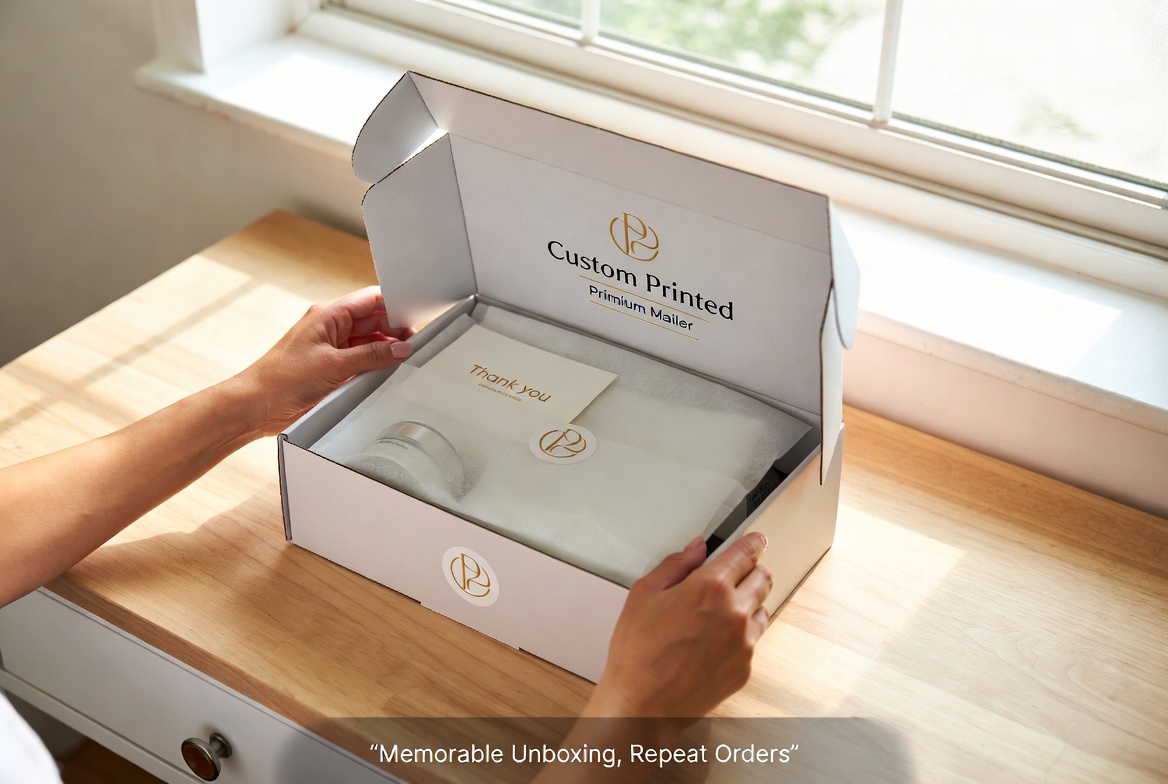
Example Branded Unboxing Flow
Here is a simple unboxing flow that many small brands use successfully:
1. The customer receives a custom printed mailer box with your logo on the exterior.
2. On opening, they see branded tissue paper wrapped around the product and sealed with a logo sticker. [youtube]
3. Beneath the tissue is the product, held securely by a custom insert or snug void fill.
4. A thank‑you card and discount code invite repeat purchases and reviews.
This structure is affordable at scale and can be fully customized through an experienced box manufacturer offering OEM/ODM services. [xkdisplay]
Practical Checklist for Setting Up Your First Packaging Station
For small businesses just getting started, it can be overwhelming to know what to buy first. Here is a straightforward, actionable checklist you can use as a baseline:
- 2–3 box sizes covering your most common order combinations.
- 1–2 poly mailer sizes for apparel or small non‑fragile items.
- Packing tape (clear or branded) and a reliable dispenser.
- Basic void fill (kraft paper, bubble wrap, or air pillows).
- Shipping labels, a label printer, and fragile/handle‑with‑care stickers.
- Simple storage racks or shelves to keep boxes and fillers organized.
As your order volume grows, you can phase in custom printing, inserts, and more specialized materials, working with a packaging partner that understands your industry and can support flexible minimum order quantities. [xkdisplay]
Why Work With a Professional Packaging Manufacturer?
From the outside, packaging can look like a commodity. But from inside the industry, we know that material selection, print quality, and structural design can make or break the customer experience and your unit economics. [fonzy]
A professional packaging manufacturer with OEM/ODM capabilities can help you:
- Choose materials and structures suited to your product and shipping profile.
- Align your packaging with regulatory and sustainability requirements for your target markets. [fonzy]
- Streamline sampling, testing, and mass production so you can scale without supply interruptions. [xkdisplay]
For example, Shenzhen XingKun Packing Products Co., Ltd has been producing packaging boxes, paper bags, plastic boxes, playing cards, labels, manuals, and other printed products since 2004, serving a wide range of industries including electronics, cosmetics, tools, and children's products. With full OEM/ODM service and certifications such as ISO 9001 and FSC for materials, we adapt to different project sizes and custom design requirements while maintaining consistent quality. [xkprint-pack]
Quick Reference Table – Core Packaging Categories for Small Businesses
| Category | Typical Use Case | Key Benefits |
| Boxes | E‑commerce, fragile goods, gift sets | Strong protection, premium branding surface |
| Bags | Apparel, retail, giveaways (xkprint-pack) | Lightweight, portable, cost‑effective |
| Shipping supplies | All shipped orders (youtube) | Damage prevention and secure sealing |
| Packing supplies | Warehouse accuracy and protection | Fewer errors, less damage, better organization |
| Shipping equipment | Growing fulfillment operations (serps) | Higher efficiency and consistent packing |
Action Steps – How to Upgrade Your Packaging System This Quarter
If you want to translate this guide into action, you can use a simple three‑step approach:
1. Audit your current packaging.
- Measure breakage rates, customer complaints, and actual per‑order packaging cost.
- Identify which SKUs cause the most packaging issues.
2. Redesign your core box and bag lineup.
- Select 2–3 priority products and design dedicated boxes or sets of sizes for them. [serps]
- Align artwork, color palette, and messaging across boxes, bags, and inserts.
3. Standardize your packing process.
- Document a simple packing SOP that describes which box, filler, and inserts to use for each order type.
- Train your team and continuously optimize as you get feedback.
Working with a specialized packaging manufacturer that can handle both design sampling and bulk production will shorten your learning curve and help you avoid expensive trial‑and‑error. [xkprint-pack]
Call to Action – Ready to Level Up Your Packaging?
If you are a small business owner or distributor looking to upgrade from generic packaging to tailor‑made boxes, bags, and printed materials, now is the right time to act. By optimizing your packaging system today, you can reduce damage, improve unboxing experiences, and present a more professional brand to customers around the world. [fonzy]
As an experienced printing and packaging producer with over two decades in the industry, we can help you choose the right materials, structure, and print options for your products and budget. Reach out with your product details, target markets, and brand requirements, and we will work with you to design and manufacture custom packaging solutions that support your growth instead of holding it back. [xkdisplay]
FAQ
Q1: What packaging supplies do I absolutely need to start an online shop?
At minimum, you need 2–3 box sizes, basic poly mailers, packing tape, void fill, labels, and a simple tape dispenser. This basic setup allows you to ship most small products safely and professionally while you learn more about your ideal box sizes and branding direction. [serps]
Q2: When should I switch from generic boxes to custom printed boxes?
You should consider custom printed boxes once you have stable order volumes and a clear brand identity, because custom printing improves perceived value and repeat purchase intent while spreading your brand every time a parcel ships. Many small brands see the best ROI when they upgrade packaging at the same time they refresh their visual identity or launch a new product line. [xgoldenprint]
Q3: Are poly mailers safe enough for most products?
Poly mailers are suitable for non‑fragile items like apparel, soft goods, and some accessories. For fragile or high‑value products, we recommend using corrugated boxes with proper void fill or inserts to prevent transit damage and customer complaints. [futuremarketinsights]
Q4: How can I keep packaging costs low without looking cheap?
Focus on right‑sizing your boxes, buying core supplies in bulk, and using one or two strong brand elements (such as consistent colors and a logo on bags or tape) instead of multiple expensive finishes. Over time, your manufacturer can help you optimize materials and structural designs to reduce waste while keeping presentation on‑brand. [xkprint-pack]
Q5: What should I look for in a packaging manufacturer?
Look for a partner with proven experience, flexible OEM/ODM services, relevant certifications, and the ability to produce multiple product types (boxes, bags, labels, manuals, etc.) so you can centralize your packaging needs. Clear communication, fast sampling, and reliable lead times are critical, especially when you are serving international customers and distributors. [xkprint-pack]
References
1. Gushwork AI – *How SEO Helps Packaging Manufacturers Generate More Leads* – <https://www.gushwork.ai/blog/seo-packaging-manufacturers>. [gushwork]
2. SERPs.io – *SEO Guide for Packaging Company: Rankings, Traffic & Leads (2026)* – <https://serps.io/resources/seo-guide/packaging-company>. [serps]
3. Fonzy.ai – *SEO Playbook for Packaging Manufacturers* – <https://www.fonzy.ai/playbooks/seo/specialized-b2b/packaging-manufacturers>. [fonzy]
4. Future Market Insights – *Void Fill Packaging Systems Market Demand 2025–2035* – <https://www.futuremarketinsights.com/reports/void-fill-packaging-systems-market>. [futuremarketinsights]
5. Shenzhen XingKun Packing Products Co., Ltd – Company profile and product scope – <https://www.xkprint-pack.com>. [xkprint-pack]
6. XINGKUN – OEM/ODM and certification overview – <https://www.xkdisplay.com>. [xkdisplay]
7. XINGKUN – Custom gift bag product details – <https://www.xkprint-pack.com/packaging-bag-and-labels/paper-bag/gift-bag.html>. [xkprint-pack]
8. Packageit – *The Packaging Supplies Essential for Your Small Business* – <https://www.packageit.com/the-packaging-supplies-small-business>.
9. Maddie Green Boutique – *Small Business Packaging Supplies I Use for Every Order* – <https://www.youtube.com/watch?v=TGZdBxUMVAw>. [youtube]
10. QuickCreator – *SEO for Packaging Manufacturers: 2025 Best Practices* – <https://quickcreator.io/blog/seo-for-packaging-manufacturers-2025-best-practices/>. [quickcreator]


