Content Menu
● What Are Traceability Barcode Labels?
● Why Barcode Traceability Matters for Brands
>> 1. Faster Product Recalls and Quality Investigations
>> 2. Better Inventory Accuracy
>> 3. Stronger Anti-Counterfeit Programs
>> 4. Improved Regulatory Readiness
>> 5. Greater Supply-Chain Visibility
● Barcode Types for Traceability Labels
>> When to Use 1D Barcodes
>> When to Use 2D Barcode Labels
● The Data Behind a Traceability Barcode
>> Product-Level Data
>> Batch-Level Data
>> Unit-Level Data
● How to Design Barcode Labels That Scan Reliably
>> Use High Contrast
>> Protect the Quiet Zone
>> Choose the Right Print Technology
● A Step-by-Step Implementation Plan
>> Step 1: Define the Traceability Objective
>> Step 2: Map the Product Journey
>> Step 3: Select the Identifier Structure
>> Step 4: Match Label Material to Conditions
>> Step 5: Test With Real Scanners
>> Step 6: Verify Print Quality
● Common Traceability Label Mistakes
>> Using One Generic Barcode for Every Unit
>> Encoding Data Without System Integration
>> Printing Too Small
>> Ignoring Human-Readable Information
>> Treating Compliance as a Graphic Requirement
● How XingKun Supports Custom Barcode Label Projects
● Conclusion
● FAQ
>> 1. What information should a traceability barcode contain?
>> 2. What is the difference between a QR code and a Data Matrix code?
>> 3. Can a barcode label be used for anti-counterfeit protection?
>> 4. Which label material is best for industrial barcode labels?
>> 5. How can I prevent barcode scanning failures?
>> 6. Do I need GS1 standards for traceability labels?
>> 7. Can XingKun print variable barcode labels?
● References
Traceability barcode labels turn physical products, cartons, and components into scannable records that can be tracked across production, warehousing, distribution, and after-sales service. For brands that source internationally, a well-designed barcode label is not just a sticker—it is a critical link between the product, its batch history, quality records, inventory data, and customer-facing information.
At Shenzhen XingKun Packing Products Co., Ltd. (XingKun), we support brands, wholesalers, and manufacturers with custom-printed packaging and label solutions. When planning traceability barcode labels, we look beyond appearance. The label must remain readable through real supply-chain conditions: packing, transport, handling, refrigeration, abrasion, and scanning at different locations.
This guide explains how traceability labels work, how to select the right barcode format and material, and how to avoid the quality failures that can disrupt operations or weaken compliance.
What Are Traceability Barcode Labels?
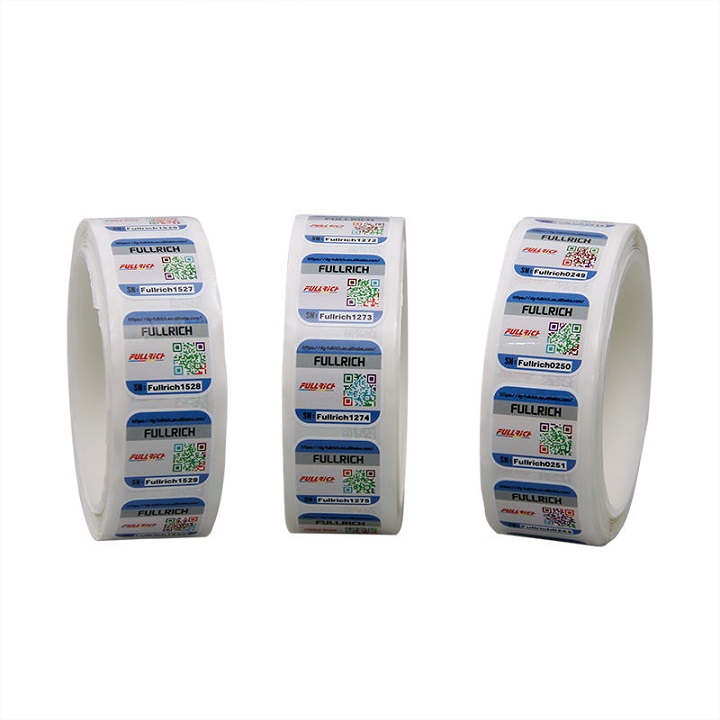
Traceability barcode labels are printed labels that encode a unique product identifier and related production or logistics data in a machine-readable format. A scanner, mobile device, warehouse system, ERP, MES, WMS, or cloud platform can read the barcode and connect the physical item to its digital record.
A traceability system commonly records:
- Product name, SKU, or GTIN
- Batch or lot number
- Serial number
- Manufacturing date
- Expiration or best-before date
- Supplier and factory information
- Production line or operator reference
- Destination, carton, pallet, or shipment details
- Inspection, return, repair, or recall history
The barcode itself does not create traceability. The data process does. The label provides the physical identifier that allows each supply-chain event to be captured accurately.
For example, a cosmetics brand may apply a 2D barcode label to each retail carton. Once scanned, the code can identify the exact SKU, production lot, manufacturing date, expiry date, and serial number. If a quality issue occurs, the brand can isolate the affected lot rather than recalling every unit in the market.
Why Barcode Traceability Matters for Brands
Modern supply chains are fast, global, and often multi-layered. Products may move from raw-material suppliers to factories, third-party logistics providers, distributors, retailers, and end users. Without a consistent identification system, it becomes difficult to know where a product came from, where it is now, and which records apply to it.
Traceability barcode labels help companies improve control in five practical areas.
1. Faster Product Recalls and Quality Investigations
A unique lot code or serial number allows a brand to identify potentially affected products quickly. Instead of investigating every shipment, the company can search its records for the exact production run, delivery route, and receiving customer.
For foods covered by the US FDA Food Traceability Rule, organizations may need to maintain Key Data Elements connected to defined Critical Tracking Events. These events include activities such as receiving, shipping, transformation, harvesting, cooling, and initial packing, depending on the operation. [fda]
2. Better Inventory Accuracy
Barcode scanning reduces manual typing during receiving, picking, stock counts, and shipment confirmation. A reliable label supports faster transactions while helping teams match the physical product with the correct digital record.
This is especially valuable for brands managing multiple SKUs, variants, languages, seasonal designs, or product bundles. A small printing or data-entry error can lead to incorrect inventory, mis-shipments, customer complaints, and expensive rework.
3. Stronger Anti-Counterfeit Programs
Serialized labels can make counterfeit detection more effective. A brand can assign a unique code to each saleable item and validate it through distributor systems or a consumer-facing scan experience.
However, a QR code alone is not an anti-counterfeit solution. If every unit carries the same static code, it can be copied. Genuine authentication requires unique serialisation, controlled data generation, secure system validation, and defined responses when duplicate or suspicious scans occur.
4. Improved Regulatory Readiness
Regulated sectors often require specific identifiers, label formats, and recordkeeping. Pharmaceutical, medical device, food, chemical, automotive, aerospace, and electronics companies may each have different requirements.
For certain US prescription drug packages, FDA guidance states that product identifiers must include a standardized numerical identifier, serial number, lot number, and expiration date in both human-readable and machine-readable form. The machine-readable package identifier is generally required in a 2D Data Matrix barcode. [fda]
5. Greater Supply-Chain Visibility
A barcode label can provide a consistent data reference from production to delivery. When connected to operational systems, it creates visibility for:
- Work-in-progress tracking
- Component consumption
- Warehouse movements
- Carton and pallet aggregation
- Shipment verification
- Distributor receiving
- Product returns
- Warranty registration
- Field-service records
Barcode Types for Traceability Labels
Selecting a barcode type should start with your data requirements, scanning environment, available label area, and industry standards—not with a visual preference.
| Barcode type | Best for | Typical data capacity | Key consideration |
| Code 128 | Cartons, logistics, internal inventory | Medium | Flexible 1D code, but requires more horizontal space |
| GS1-128 | Shipping cases and logistics units | Medium | Supports GS1 application identifiers and structured logistics data |
| EAN/UPC | Retail point of sale | Low | Identifies product type, but normally does not carry batch or serial data |
| QR Code | Consumer engagement, web links, product information | High | Useful for mobile scanning and digital content |
| Data Matrix | Small products, healthcare, electronics, serialisation | High | Dense 2D format suitable for limited print space |
| GS1 DataMatrix | Healthcare and regulated traceability | High | Supports structured GS1 data, including GTIN, lot, expiry, and serial number |
| PDF417 | Documents, ID, and larger data sets | High | Less common for small retail packaging |
When to Use 1D Barcodes
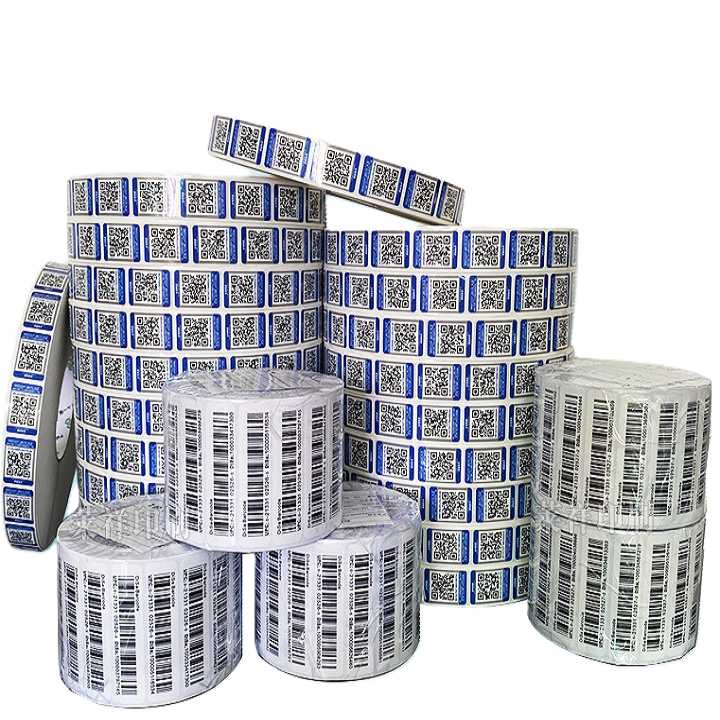
A 1D barcode uses bars and spaces in a horizontal line. It is a practical choice when the code contains a simple identifier, the print area is wide enough, and scanning occurs with standard laser or image-based scanners.
Common uses include:
- Warehouse location labels
- Outer carton labels
- Shipping labels
- Internal SKU labels
- Pallet identification
- Library or document tracking
When to Use 2D Barcode Labels
A 2D barcode stores information in both horizontal and vertical directions. It can hold much more data in a smaller space than a 1D code.
Use a 2D code when the label needs to include multiple data fields, such as:
- GTIN
- Batch or lot number
- Serial number
- Expiration date
- Manufacturing date
- URL or GS1 Digital Link
- Product authentication data
GS1's 2D-barcode guidance highlights a broad transition toward more capable 2D barcode systems. Its "Ambition 2027" goal is for retail point-of-sale scanners globally to be able to read and process both legacy 1D and newer 2D barcodes by the end of 2027. [ref.gs1]
The Data Behind a Traceability Barcode
A barcode is only as useful as its data structure. Before ordering custom barcode labels, define exactly what the code must identify and where the data will be stored.
A practical starting point is to separate data into three levels.
Product-Level Data
This identifies the product design or commercial item.
Examples include:
- Brand name
- Product name
- SKU
- Variant or color
- GTIN
- Packaging configuration
Product-level data may be identical across many units.
Batch-Level Data
This connects a group of products to a common manufacturing or sourcing event.
Examples include:
- Lot number
- Production date
- Factory code
- Raw-material lot
- Quality-control record
- Expiry date
Batch tracking is useful when products are produced in runs and the business needs efficient recall capability.
Unit-Level Data
This gives every unit its own identity.
Examples include:
- Unique serial number
- Authentication token
- Warranty registration ID
- Repair history reference
- Digital product passport reference
Unit-level serialisation offers the highest traceability granularity. It is often appropriate for high-value, regulated, safety-critical, warranty-sensitive, or counterfeit-prone products.
How to Design Barcode Labels That Scan Reliably
A label can look perfect to the human eye and still fail scanning. In our packaging work, the most common problems come from inadequate contrast, small code size, poor placement, damaged surfaces, inconsistent variable data, or insufficient blank space around the barcode.
Use High Contrast
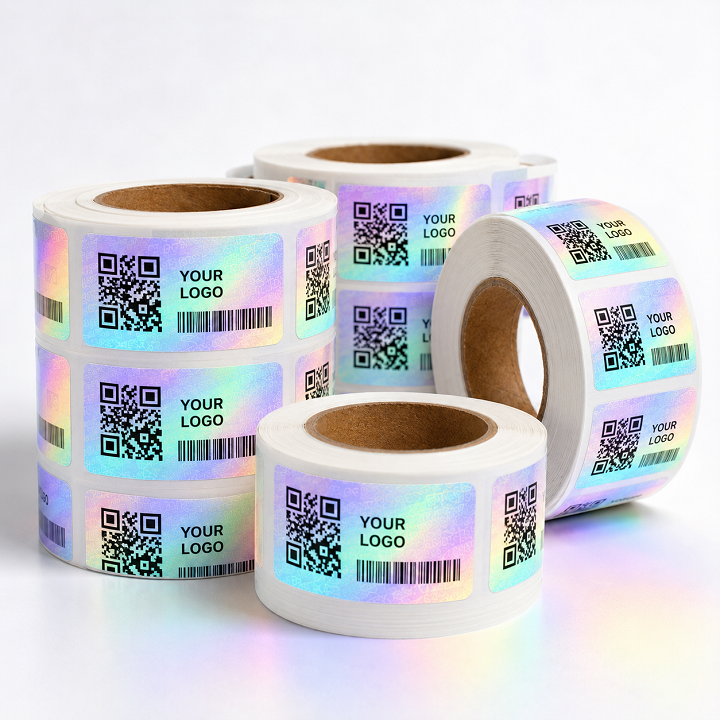
Black symbols on a white background remain the most reliable and versatile choice. Dark ink on a light, matte background generally produces better scanning performance than metallic, transparent, patterned, or low-contrast materials.
Avoid placing barcodes over:
- Busy graphics
- Foil effects
- Holographic surfaces
- Strong texture
- Seams or folds
- Glossy varnish that creates glare
- Dark transparent films
- Product photography
Protect the Quiet Zone
The quiet zone is the blank area around a barcode. It is not optional decoration; it helps scanners distinguish the code from surrounding artwork.
GS1 states that a GS1 DataMatrix symbol requires a clear quiet zone with a minimum width of one X-dimension around all four sides. If the quiet zone is insufficient, the symbol can fail ISO/IEC 15415 verification. [gs1]
For QR codes, the quiet zone typically needs more space. GS1 guidance specifies a quiet zone of four times the X-dimension on each side for QR Code symbols. [ref.gs1]
Choose the Right Print Technology
The appropriate printing method depends on volume, variable-data requirements, material, and expected environmental exposure.
| Printing method | Suitable applications | Main advantages | Watch-outs |
| Digital printing | Short runs, prototypes, variable designs | Fast setup, flexible artwork changes | Confirm barcode verification for production output |
| Flexographic printing | High-volume roll labels | Efficient for repeat production | Requires careful plate and color control |
| Thermal transfer | Variable-data labels | Durable resin or wax-resin options | Ribbon and substrate must match the environment |
| Direct thermal | Short-life logistics labels | Simple and economical | Can fade with heat, sunlight, or time |
| Laser marking | Industrial parts and durable surfaces | High permanence | Substrate compatibility and contrast matter |
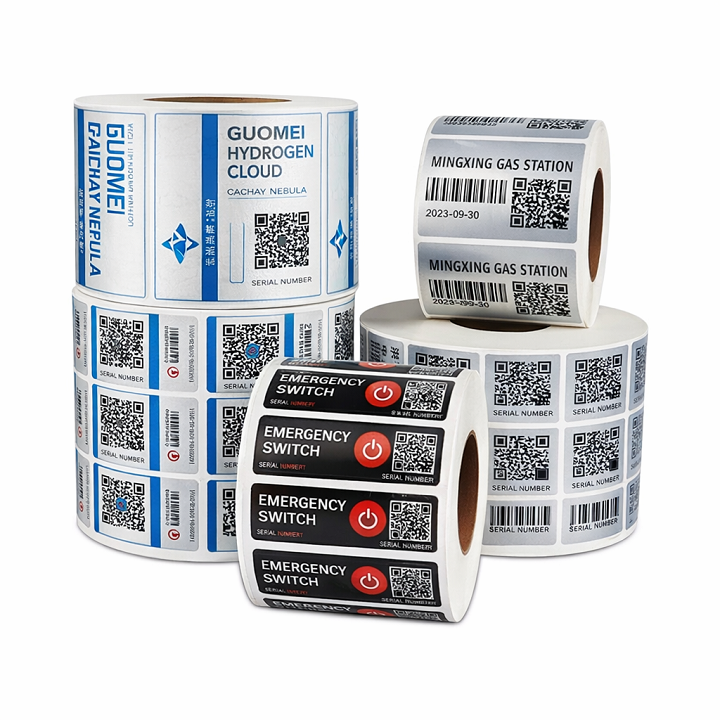
For labels exposed to moisture, oil, chemicals, heat, abrasion, or outdoor conditions, material selection is as important as barcode design. Paper labels may be suitable for dry, short-life applications. PET, PP, PE, vinyl, or specialty industrial films may be more appropriate where durability is required.
A Step-by-Step Implementation Plan
A traceability project should be designed as an operational system, not simply a label-purchasing project.
Step 1: Define the Traceability Objective
Start with the business problem.
Ask:
- Are you improving recall readiness?
- Do you need inventory accuracy?
- Are you reducing counterfeit risk?
- Do you need to meet customer or regulatory requirements?
- Are you tracking batches, individual units, or both?
- Will consumers scan the label, or only internal teams?
A food producer may prioritize lot traceability and shipping records. A premium electronics brand may prioritize unique serialisation, warranty data, and anti-counterfeit verification.
Step 2: Map the Product Journey
Identify each point where the item changes status, location, ownership, or configuration.
Typical events include:
1. Raw-material receiving
2. Production start
3. Quality inspection
4. Packaging
5. Carton packing
6. Palletisation
7. Warehouse receiving
8. Shipment
9. Distributor receiving
10. Retail sale, return, or warranty claim
This mapping reveals where labels need to be applied and scanned.
Step 3: Select the Identifier Structure
Choose a consistent format for SKUs, lot numbers, serial numbers, carton IDs, and pallet IDs. Do not allow each supplier, department, or factory to invent its own numbering convention.
For global supply chains, GS1 standards can provide a structured foundation. GS1 Digital Link is designed to encode identifiers such as GTINs, GLNs, SSCCs, batch numbers, serial numbers, and expiry dates in a standardized web-compatible format. [gs1]
Step 4: Match Label Material to Conditions
Consider the full life of the label:
- Indoor or outdoor?
- Ambient, frozen, refrigerated, or high-temperature?
- Smooth carton, coated paperboard, plastic, glass, metal, or fabric?
- Exposure to water, oil, alcohol, solvents, abrasion, or UV?
- Manual handling, conveyor use, or automatic application?
- Required service life: days, months, or years?
A label that survives factory packing but fails after cold-chain transport is not a successful traceability label.
Step 5: Test With Real Scanners
Do not approve label artwork based only on a phone scan. Test the final production material, ink, finish, print size, and placement using the scanners that will be used in actual operations.
Test under realistic conditions:
- Different lighting
- High and low scan angles
- Curved packages
- Fast conveyor movement
- Worn or scratched labels
- Cold, humid, or reflective environments
- Multiple scanner brands and device types
Step 6: Verify Print Quality
Verification is different from scanning. A scanner confirms whether one device can read a symbol. A verifier measures whether the printed barcode meets defined quality parameters.
For critical applications, include barcode verification in your quality-control process. Keep records by print batch, production date, label material, printer, and artwork version.
Common Traceability Label Mistakes
Using One Generic Barcode for Every Unit
A product-level UPC or EAN identifies the item type, but it normally cannot distinguish individual units. If you need anti-counterfeit control, warranty registration, field returns, or unit-specific service history, use serialised codes.
Encoding Data Without System Integration
A barcode containing a serial number has limited value if the serial number is not connected to a usable database. Before print production, confirm where data is generated, who owns it, who can update it, and how downstream users will access it.
Printing Too Small
Small labels can push companies to reduce barcode size beyond reliable scanning limits. This risk is particularly high with dense 2D codes, low-quality thermal printing, and curved retail packaging.
The solution is not simply "make the code smaller." Consider reducing encoded content, using structured data, changing the label layout, moving the code to another panel, or selecting a different symbology.
Ignoring Human-Readable Information
A barcode supports automation, but people still need to read essential details. Include visible text for information that operators, inspectors, distributors, or consumers may need when scanning is unavailable.
For pharmaceutical product identifiers under FDA guidance, the NDC, serial number, lot number, and expiration date are expected in both human-readable and machine-readable forms. [fda]
Treating Compliance as a Graphic Requirement
Compliance is not achieved simply because the correct barcode appears on the package. It also requires correct data, proper recordkeeping, validated processes, suitable materials, and ongoing quality control.
How XingKun Supports Custom Barcode Label Projects
XingKun provides custom packaging and printed product solutions for overseas brands, wholesalers, and manufacturers. For traceability barcode label projects, the most effective process begins with application details rather than a generic quotation request.
Please prepare the following information:
- Product type and packaging material
- Label size and application position
- Barcode type: Code 128, GS1-128, QR Code, Data Matrix, or other
- Static or variable data requirement
- Required information: SKU, lot, serial number, expiry date, URL, and so on
- Roll labels, sheet labels, or individually cut labels
- Required adhesive and environmental conditions
- Quantity per design and total order quantity
- Artwork files, preferred finish, and target market
For complex programs, we recommend starting with a sample run. This allows your team to test adhesion, scan performance, artwork readability, and packaging compatibility before final production.
Conclusion
Traceability barcode labels are a practical foundation for product visibility, quality control, inventory accuracy, recall readiness, compliance, and brand protection. The best solution combines the right barcode format, a disciplined data structure, durable label materials, correct quiet zones, verified print quality, and a scanning workflow that works in real operating conditions.
For brands that need custom traceability barcode labels, the key question is not only "Can this code scan today?" It is "Will this label remain readable, correctly linked to data, and usable at every critical stage of the product lifecycle?" XingKun can help turn that requirement into a custom label and packaging specification suitable for OEM and ODM production.
FAQ
1. What information should a traceability barcode contain?
The required information depends on your industry and traceability goal. Common data fields include SKU or GTIN, lot number, serial number, manufacturing date, expiration date, factory code, shipment reference, and product URL. Use only the data needed by your scanning and recordkeeping system.
2. What is the difference between a QR code and a Data Matrix code?
Both are 2D barcodes, but they are commonly used for different purposes. QR codes are widely used for smartphone scanning, consumer engagement, and web links; Data Matrix codes are compact and often used for industrial, healthcare, electronics, and serialized traceability applications. In US pharmaceutical DSCSA contexts, FDA guidance specifically distinguishes Data Matrix from QR codes. [fda]
3. Can a barcode label be used for anti-counterfeit protection?
Yes, but only when it uses unique serialisation and connects to a secure verification database. A static barcode repeated across all products can be copied and does not provide reliable authentication by itself.
4. Which label material is best for industrial barcode labels?
There is no universal material. Paper labels can work for dry and short-term uses, while PET, PP, PE, vinyl, and specialty films may be better for moisture, chemicals, heat, abrasion, and long-term durability. The adhesive must also match the product surface and temperature conditions.
5. How can I prevent barcode scanning failures?
Use sufficient contrast, protect the quiet zone, avoid placing codes over folds or artwork, select an appropriate barcode size, use suitable ink and substrate combinations, and test final labels with real production scanners. For high-risk applications, add formal barcode verification to quality control.
6. Do I need GS1 standards for traceability labels?
Not every internal traceability program requires GS1, but GS1 standards are highly useful when products move through global supply chains, retail systems, healthcare channels, or multiple trading partners. They provide a common way to structure identifiers and related data.
7. Can XingKun print variable barcode labels?
For a variable-data label project, the technical specification should define the barcode type, data source, serialisation logic, print quantity, label material, application method, and quality-verification requirements. Contact XingKun with these details, and begin with samples or a controlled pilot run when the labels are used in critical supply-chain or compliance processes.
References
1. U.S. Food and Drug Administration. "[Product Identifiers Under the Drug Supply Chain Security Act: Questions and Answers]." Guidance for Industry, June 2021. Covers machine-readable and human-readable product identifiers, 2D Data Matrix expectations for certain prescription drug packages, and continued linear-barcode requirements. [fda]
2. U.S. Food and Drug Administration. "[FSMA Final Rule on Requirements for Additional Traceability Records for Certain Foods]." Explains Critical Tracking Events, Key Data Elements, and traceability-lot-code requirements for applicable foods. [fda]
3. GS1. "[Solution Provider 2D Readiness]." Describes GS1 Ambition 2027 and the goal for retail POS systems to process both 1D and 2D barcodes by the end of 2027. [ref.gs1]
4. GS1. "[2D Barcodes at Retail Point-of-Sale Implementation Guideline]." Provides guidance on 2D barcode size, quality, placement, quiet zones, syntax, and human-readable text. [ref.gs1]
5. GS1. "[GS1 DataMatrix Guideline]." Explains DataMatrix quiet-zone requirements and notes that ISO/IEC 15415 and GS1 General Specifications define print-quality testing methodology. [gs1]
6. GS1. "[GS1 Digital Link]." Describes a standardized approach for encoding GS1 identifiers and attributes, including GTINs, GLNs, SSCCs, batch numbers, serial numbers, and expiry dates. [gs1]


