Content Menu
● What Are Waterproof Labels?
● Why Waterproof Product Labels Matter for Brands
>> Key commercial benefits of waterproof labels
● Waterproof vs. Water-Resistant Labels
● Best Materials for Custom Waterproof Labels
>> BOPP Labels for Food, Beverage, and Cosmetics
>> Advantages of BOPP waterproof labels
>> Vinyl Labels for Flexible and Outdoor Uses
>> Advantages of vinyl waterproof stickers
>> Polyester Labels for Industrial and High-Durability Applications
>> Polyethylene and Specialty Films
● The Waterproof Label System: Material Is Only One Part
>> 1. Face Material
>> 2. Adhesive
>> 3. Printing Method and Ink
>> 4. Lamination or Protective Coating
● How to Choose Waterproof Labels Step by Step
>> Step 1: Define the real use environment
>> Step 2: Identify the container material and shape
>> Step 3: Choose the label material
>> Step 4: Specify artwork and finishing
>> Step 5: Test samples under actual conditions
● Waterproof Label Performance Testing and Standards
>> BS 5609 for Marine Chemical Labels
>> UL Labeling Evaluations
>> Important sourcing principle
● Common Waterproof Label Problems and How to Prevent Them
>> Label edges lift after refrigeration
>> Print smudges or scratches
>> Labels wrinkle on squeeze bottles
>> Clear labels look gray or lose color impact
>> Labels fail on oily or low-energy plastic surfaces
● Industry Applications for Waterproof Labels
>> Food and Beverage Labels
>> Cosmetic and Personal-Care Labels
>> Household and Cleaning Product Labels
>> Industrial and Logistics Labels
● Why OEM Buyers Should Request a Label Specification
>> Waterproof label RFQ checklist
● Expert Insight: "Waterproof" Is a Performance Requirement, Not a Material Name
● Custom Waterproof Labels From XingKun
● Conclusion
● FAQ
>> 1. Are BOPP labels waterproof?
>> 2. What is the best waterproof label material for bottles?
>> 3. Can waterproof labels be used in the freezer?
>> 4. Do waterproof labels need lamination?
>> 5. Can I print clear waterproof labels with white text?
>> 6. What is the difference between waterproof labels and weatherproof labels?
>> 7. Are waterproof labels suitable for chemical containers?
● References
Waterproof labels help brands keep product information clear, attractive, and securely attached when products encounter moisture, condensation, refrigeration, oil, splashes, handling, or outdoor exposure. For beverages, cosmetics, food containers, household products, industrial goods, and promotional packaging, a label that peels, wrinkles, fades, or smudges can damage both brand perception and traceability.
At Shenzhen XingKun Packing Products Co., Ltd. (XingKun), we work with international brands, wholesalers, manufacturers, and private-label buyers that need custom printed packaging and labels made for real commercial conditions—not merely labels that look good when first applied. A dependable waterproof label is a complete engineered system: face material + adhesive + ink + finish + application surface + actual use environment.
This guide explains how to choose custom waterproof labels, when to use BOPP, vinyl, or polyester labels, how to prevent common failures, and how OEM/ODM buyers can specify labels that support a premium product experience.
What Are Waterproof Labels?
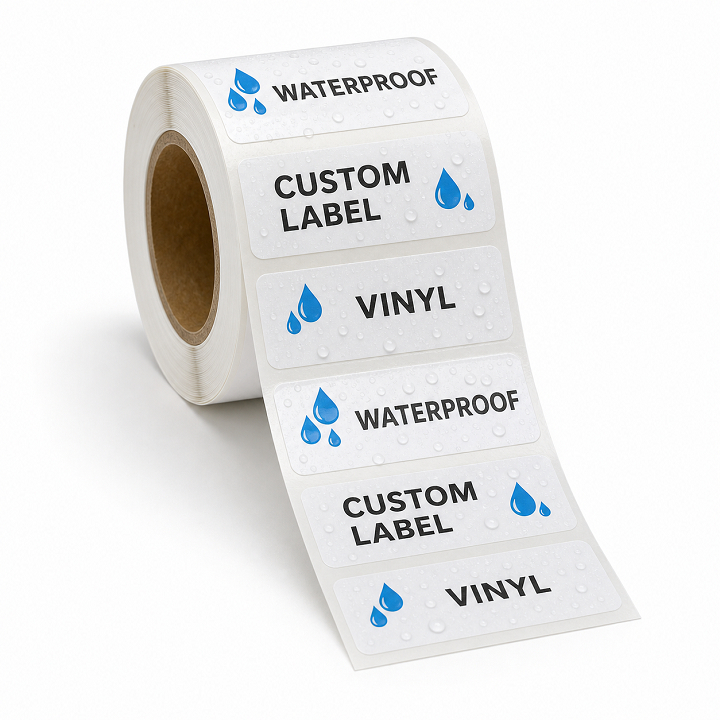
Waterproof labels are pressure-sensitive or adhesive labels designed to remain attached and readable after exposure to water, humidity, condensation, refrigeration, splashes, or limited immersion. They commonly use synthetic film materials rather than standard uncoated paper.
A well-designed waterproof label should help resist:
- Water and moisture
- Condensation on chilled bottles or jars
- Oil and grease
- Tearing during handling
- Smudging or ink transfer
- Peeling around label edges
- Scratches and abrasion
- Short-term freezer or refrigerator conditions
- Outdoor humidity and weather exposure, where the material and adhesive are specified for it
However, "waterproof" should never be treated as a universal performance guarantee. A label suitable for a refrigerated juice bottle may not be suitable for a chemical drum, a shower product, a freezer package, or years of outdoor sunlight.
The practical question is not simply, "Do I need waterproof labels?" It is:
> What liquid, temperature, surface, handling process, and expected service life must the label survive?
That question should guide material selection before artwork production begins.
Why Waterproof Product Labels Matter for Brands
A label is often the first physical point of contact between a consumer and a product. When a label curls, dissolves, wrinkles, or loses legibility, the product can appear low quality—even if the product itself is excellent.
For B2B buyers, waterproof custom labels also support more than visual branding. They can affect operational accuracy, regulatory communication, and customer confidence.
Key commercial benefits of waterproof labels
- Protect brand appearance on wet, cold, or frequently handled products.
- Maintain readable instructions such as ingredients, usage directions, safety warnings, barcodes, batch information, and expiry details.
- Support product traceability when labels include lot codes, QR codes, serial numbers, or warehouse identifiers.
- Improve shelf presentation for bottles, jars, tubes, pouches, cans, and containers.
- Reduce relabeling and returns caused by edge lifting, damaged graphics, or unreadable product data.
- Increase perceived product value through glossy, matte, clear, metallic, textured, or premium finishing effects.
- Enable differentiation in crowded retail and e-commerce categories.
For example, a premium shampoo bottle may be exposed to water in a bathroom every day. A paper label can absorb moisture and deteriorate. A properly selected film label with moisture-resistant ink protection and suitable adhesive can preserve the brand design through repeated consumer use.
Waterproof vs. Water-Resistant Labels
The terms waterproof labels and water-resistant labels are often used interchangeably in marketing, but they should be distinguished during product development.
| Label Type |
Typical Water Exposure |
Common Materials |
Suitable Applications |
| Water-resistant label |
Light splashes, humidity, brief contact with moisture |
Coated paper, laminated paper, some films |
Dry goods, short-life packaging, indoor retail products |
| Waterproof label |
Condensation, refrigeration, repeated splashes, wet environments, short-term immersion |
BOPP, vinyl, polyethylene, polyester/PET |
Beverage bottles, cosmetics, bath products, chilled food, cleaning products |
| Heavy-duty durable label |
Chemicals, UV, abrasion, extreme temperatures, long-term outdoor or industrial use |
Polyester/PET, specialty vinyl, engineered films |
Industrial equipment, chemical containers, asset tags, outdoor products |
A film material may be inherently moisture resistant, but the finished label can still fail if the adhesive is unsuitable or the print is unprotected. For this reason, buyers should evaluate the complete label construction, not just the face stock.
Avery Dennison notes that durable goods and equipment labels must perform in hostile environments and across varied conditions and temperatures, which highlights why material and adhesive selection must follow the actual application environment. [label.averydennison]
Best Materials for Custom Waterproof Labels
Selecting the correct label stock is one of the highest-impact decisions in waterproof label manufacturing. The following materials are common options for custom printed waterproof labels.
BOPP Labels for Food, Beverage, and Cosmetics
BOPP, or biaxially oriented polypropylene, is one of the most widely used film materials for consumer packaging labels. It is available in white, clear, silver, and metallic formats and is widely chosen for products exposed to moisture, refrigeration, oils, and routine handling.
BOPP is especially popular for:
- Beverage bottles and canned drinks
- Food jars and containers
- Sauce, condiment, honey, and jam labels
- Skincare and cosmetic packaging
- Shampoo, body wash, and personal-care bottles
- Household cleaning products
- Candle jars and promotional labels
- Custom product stickers for e-commerce brands
Advantages of BOPP waterproof labels
- Non-porous surface that does not absorb water like paper.
- Good resistance to moisture, oil, and tearing.
- Available in white, clear, and metallic label films.
- Suitable for premium finishes such as gloss, matte, soft-touch, spot UV, and foil details.
- Offers a strong balance between cost, appearance, and daily-use durability.
- Supports "no-label look" packaging when clear BOPP is applied to transparent bottles or jars.
BOPP is frequently described as a high-performing film option for moisture-prone product categories such as food, beverages, and beauty products. However, actual performance still depends on the ink system, coating or lamination, adhesive, substrate, and exposure conditions. [bluelabelpackaging]
Vinyl Labels for Flexible and Outdoor Uses
Vinyl waterproof labels are often selected when flexibility, water resistance, and outdoor durability are especially important. They can conform well to curved or irregular surfaces and are a common option for products exposed to changing weather or rougher handling.
Vinyl labels can be a strong choice for:
- Outdoor products
- Water bottles and tumblers
- Tool labels
- Outdoor equipment
- Promotional decals
- Bath and shower products
- Sports goods
- Branded equipment and reusable containers
Advantages of vinyl waterproof stickers
- Flexible material for curved surfaces.
- Strong resistance to water and weather exposure.
- Good option for custom die-cut stickers and decals.
- Can be paired with a protective laminate for improved scratch and UV resistance.
- Useful when a softer, more conformable film is needed.
For outdoor use, buyers should not assume that "waterproof" automatically means UV-resistant. If labels will be exposed to sunlight, request specifications for UV stability, fade resistance, adhesive aging, and outdoor service life.
Polyester Labels for Industrial and High-Durability Applications
Polyester labels, also known as PET labels, are typically selected when higher mechanical strength, tear resistance, chemical resistance, temperature stability, or long-term durability is required.
PET waterproof labels are commonly used for:
- Industrial equipment
- Electronics and appliance labels
- Chemical products
- Automotive components
- Asset tracking labels
- Warehouse and logistics identification
- Laboratory or durable product information labels
- High-performance safety and warning labels
Compared with many consumer-oriented label materials, polyester is usually more rigid and more durable. It can be an excellent choice where long service life and resistance to wear matter more than high flexibility.
Industry material guides commonly position PET as a high-durability option for industrial, automotive, outdoor, and harsh-environment labeling applications. [bluelabelpackaging]
Polyethylene and Specialty Films
Polyethylene (PE) labels are flexible and can be useful for squeezable containers such as lotion bottles, tubes, and flexible personal-care packaging. A label that matches the flexibility of its container can reduce wrinkling and improve shelf appearance.
Specialty label constructions may also include:
- Metallized films
- Void or tamper-evident materials
- Removable adhesive labels
- Freezer-grade labels
- Chemical-resistant labels
- High-tack labels for difficult surfaces
- Recycled-content or lower-impact facestocks
- Transparent films for a premium "printed directly on the bottle" visual effect
The correct solution should be based on performance requirements rather than material popularity.
The Waterproof Label System: Material Is Only One Part
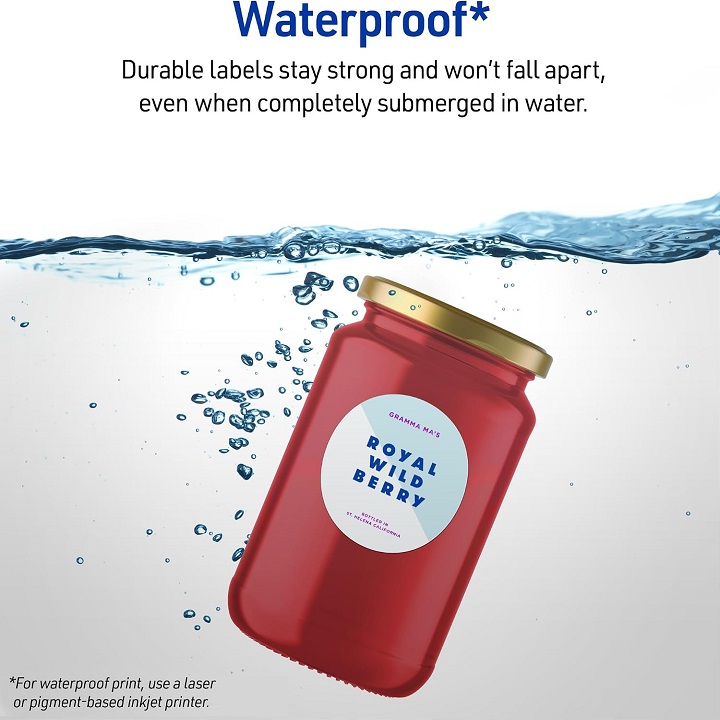
A common sourcing mistake is to request "waterproof sticker paper" or "waterproof labels" without defining the full technical requirement. In professional label development, the face material is only one component.
1. Face Material
The face material is the visible printable layer, such as BOPP, vinyl, PET, or paper. It determines:
- Appearance
- Flexibility
- Tear resistance
- Opacity
- Transparency
- Surface feel
- Initial moisture resistance
- Compatibility with inks and finishes
2. Adhesive
The adhesive determines whether the label stays attached. This is frequently the true cause of label failure.
Important adhesive considerations include:
- Is the surface glass, PET, HDPE, PP, metal, cardboard, or painted metal?
- Is the surface smooth, rough, textured, curved, oily, dusty, or cold?
- Will the label be applied before or after refrigeration?
- Does the container contain plasticizers, oil, or chemicals?
- Must the label be permanent, removable, repositionable, freezer-grade, or high-tack?
- Will the label encounter water, steam, detergent, alcohol, or grease?
A permanent adhesive designed for room-temperature application may fail if it is applied directly to a cold, wet, or frosted bottle. The label may look acceptable at first but lift within hours or days.
3. Printing Method and Ink
The printed design must remain readable after real handling. Depending on order quantity, design, material, and required durability, production may use methods such as:
- Digital printing
- Flexographic printing
- Offset printing
- Screen printing
- UV printing
- Thermal transfer printing for variable data
- Hybrid production processes
For waterproof labels, ask whether the ink is suitable for expected water exposure and whether the design needs extra protection. This is especially important for fine text, barcodes, QR codes, white ink on clear film, metallic effects, and variable data.
4. Lamination or Protective Coating
A laminate or protective coating can improve resistance to scratches, scuffs, water, and print wear. Common options include:
- Gloss lamination
- Matte lamination
- Soft-touch lamination
- UV varnish
- Matte varnish
- Spot UV
- Anti-scratch film
- Specialty chemical-resistant overlaminates
For consumer goods, a gloss finish can create vivid color and a polished retail appearance. Matte lamination can provide a more understated premium look. For industrial labels, the finishing decision should prioritize readability and durability over decorative effects.
How to Choose Waterproof Labels Step by Step
A reliable custom waterproof label project begins with application information. The following process helps brands, wholesalers, and manufacturers avoid expensive reprints.
Step 1: Define the real use environment
Describe what will happen to the product after labeling.
Ask:
- Will it be refrigerated or frozen?
- Will it face condensation?
- Will it be used in a bathroom or kitchen?
- Will it be exposed to rain or outdoor sunlight?
- Will it contact oil, alcohol, detergent, or chemicals?
- Is it handled frequently?
- Must it remain readable for weeks, months, or years?
Step 2: Identify the container material and shape
The same label can behave very differently on glass, PET, PP, HDPE, aluminum, steel, or corrugated board.
Provide:
- Container material
- Surface texture
- Diameter or circumference
- Flat, curved, tapered, or squeezable structure
- Label application area
- Whether the product is filled before labeling
A label that performs well on smooth glass may not bond the same way to a low-surface-energy plastic container.
Step 3: Choose the label material
Use the application requirements to narrow the selection.
| Requirement |
Recommended Starting Point |
| Bottled beverages and chilled foods |
White or clear BOPP with suitable permanent adhesive |
| Cosmetics and bath products |
BOPP, PE, or vinyl with waterproof print protection |
| Flexible squeeze bottles and tubes |
PE or flexible film construction |
| Outdoor branded decals |
Vinyl with UV-resistant laminate |
| Industrial assets and equipment |
Polyester/PET with durable adhesive and protective finish |
| Chemical drums and marine transport |
Certified system designed for applicable compliance requirements |
| Premium transparent packaging |
Clear BOPP with white ink where needed |
This table is a starting point—not a final engineering specification. Sample testing is still important.
Step 4: Specify artwork and finishing
Prepare print-ready files with:
- CMYK or approved Pantone colors
- Bleed area
- Safe text margins
- Die-cut line
- Barcode requirements
- QR code size and quiet zone
- White-ink layers for clear or metallic materials
- Finishing instructions
- Variable-data requirements, if any
For transparent labels, artwork planning is especially important. If white ink is not printed beneath certain colors, the container and product color can influence the final appearance.
Step 5: Test samples under actual conditions
Before scaling production, test samples on the final container and in the actual supply-chain environment.
A practical test protocol can include:
1. Apply labels to final containers using the planned production method.
2. Allow adhesive dwell time according to the supplier's recommendation.
3. Place samples in the refrigerator, freezer, bathroom-like humidity, or other relevant conditions.
4. Test with water splashes, condensation, wiping, and ordinary handling.
5. Check edges, corners, print rub resistance, color appearance, barcode scanning, and adhesive lift.
6. Record findings before approving mass production.
This sample-validation step is one of the most valuable controls in OEM label sourcing. It is far less costly to adjust material or adhesive before a large production run than after labels have been applied to finished inventory.
Waterproof Label Performance Testing and Standards
Not every waterproof label requires a formal certification. However, products used in regulated, hazardous, industrial, or marine environments may require defined test methods and compliant label systems.
BS 5609 for Marine Chemical Labels
BS 5609 is a British Standard concerning printed pressure-sensitive or adhesive-coated labels intended for marine use. It is especially relevant to labels used on chemical drums and containers transported by sea.
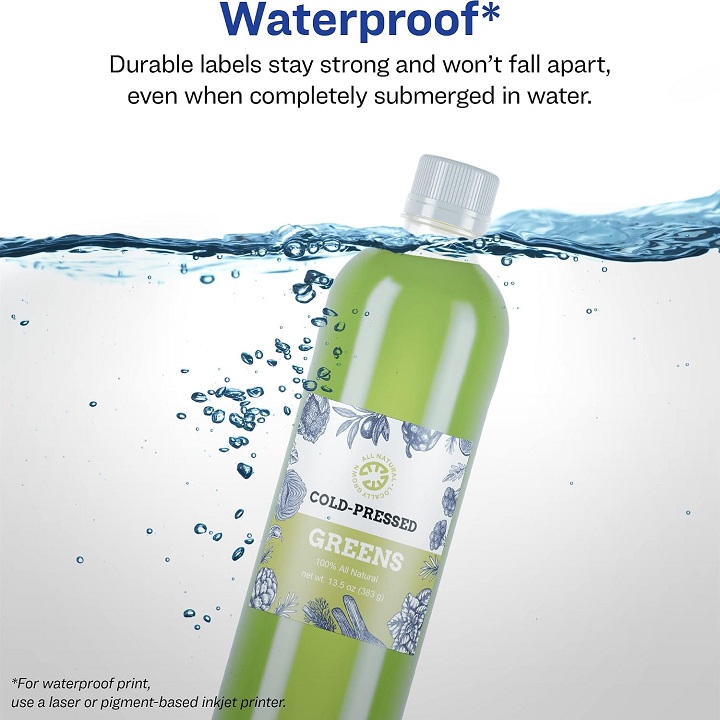
For dangerous goods transported internationally by water, label durability is closely linked to regulatory requirements under systems such as the Globally Harmonized System of Classification and Labelling of Chemicals (GHS) and the International Maritime Dangerous Goods (IMDG) Code. PPG explains that BS 5609 labels are expected to survive a three-month saltwater submersion test for this type of marine-use application. [ppg]
BS 5609 testing can include more than water exposure. Depending on the relevant section and label system, it may assess characteristics such as:
- Adhesion
- Print permanence
- Abrasion resistance
- Saltwater immersion
- UV or sunlight exposure
- Temperature changes
- Legibility after environmental stress
Brady notes that the standard addresses durability criteria for pressure-sensitive labels used on chemical drums shipped by sea, including label adhesion and readability after extended saltwater exposure. [bradyid]
UL Labeling Evaluations
For durable goods, electrical products, appliances, equipment, and industrial marking applications, UL marking and labeling evaluations may be relevant. UL Solutions provides evaluation services for marking and labeling systems, including assessment related to UL requirements and BS 5609 marine labeling. [ul]
If your customer, end market, or product specification requires UL recognition or a particular label construction, do not assume that a visually similar material is compliant. Confirm the required system, approved components, test conditions, and documentation before production.
Important sourcing principle
Do not claim "BS 5609 certified," "UL compliant," or "chemical resistant" unless the exact label construction and required performance level have been verified.
A material may be marketed as durable, but certification usually applies to a defined combination of:
- Face stock
- Adhesive
- Ink or ribbon
- Protective laminate
- Print method
- Application surface
- Test conditions
Common Waterproof Label Problems and How to Prevent Them
Label edges lift after refrigeration
Likely causes:
- Label applied to a cold or wet container
- Adhesive unsuitable for low-temperature application
- Surface contamination
- Insufficient adhesive dwell time
- Label tension or incorrect application pressure
Prevention:
- Apply labels to clean, dry containers at the recommended temperature.
- Select a cold-temperature or freezer-grade adhesive if needed.
- Test labeling after refrigeration, not just before refrigeration.
- Confirm the application equipment applies consistent pressure.
Print smudges or scratches
Likely causes:
- Ink system not suitable for moisture or abrasion
- No protective laminate or coating
- Aggressive handling during logistics
- Inadequate curing or drying
Prevention:
- Specify rub-resistance requirements.
- Add a protective laminate, varnish, or overprint coating.
- Test samples with wiping, friction, and carton-packing simulations.
- Protect barcodes, QR codes, and fine text with appropriate finishing.
Labels wrinkle on squeeze bottles
Likely causes:
- Label film is too rigid
- Container flexes during use
- Label format is too large for the curvature
- Adhesive or label structure does not match the container
Prevention:
- Consider PE or another flexible film.
- Reduce label size or adjust die-cut shape.
- Conduct squeeze testing with filled containers.
- Check how the label behaves after repeated consumer use.
Clear labels look gray or lose color impact
Likely causes:
- No white ink under colored artwork
- Dark product contents show through
- Clear bottle or container has an uneven surface
- Design was created as if it would print on white paper
Prevention:
- Create a dedicated white-ink layer.
- Use selective white backing behind logos, text, and color elements.
- Request a physical proof on the final container.
- Consider white BOPP if maximum color consistency is more important than transparency.
Labels fail on oily or low-energy plastic surfaces
Likely causes:
- Surface contamination
- Adhesive mismatch
- PP, PE, or other difficult-to-bond substrates
- Product migration or plasticizer interaction
Prevention:
- Identify the exact packaging resin early.
- Request a suitable high-tack or specialty adhesive.
- Run adhesion tests on production-grade packaging.
- Include realistic temperature and handling conditions in testing.
Industry Applications for Waterproof Labels
Food and Beverage Labels
Food and beverage labels often need to survive condensation, cold storage, ice buckets, grease, and repeated handling. BOPP labels are a frequent starting point because they provide strong moisture resistance and attractive print quality.
Typical applications include:
- Water bottles
- Cold brew coffee
- Juice and smoothies
- Beer, wine, and spirits
- Sauce bottles
- Jam and honey jars
- Frozen food packaging
- Ready-to-eat meal containers
For premium beverage branding, clear waterproof labels can create a minimalist "no-label" appearance. For stronger shelf impact, white BOPP combined with gloss or matte finishes can provide more controlled color reproduction.
Cosmetic and Personal-Care Labels
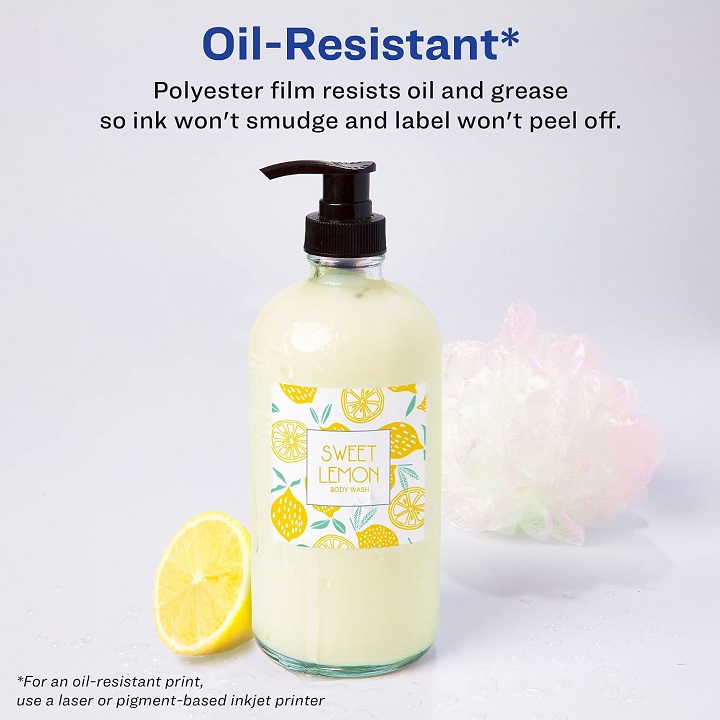
Bathrooms create challenging label conditions: water splashes, humidity, steam, oils, and regular handling. Packaging often includes curved bottles, squeeze tubes, dispensers, and jars, making material flexibility important.
Common products include:
- Shampoo and conditioner
- Body wash
- Hand soap
- Skincare products
- Facial cleansers
- Haircare products
- Essential oils
- Bath salts and body scrubs
For cosmetics, appearance matters as much as durability. Matte BOPP, clear films, metallic elements, spot UV, and soft-touch finishes can support a premium shelf presence while retaining moisture resistance.
Household and Cleaning Product Labels
Cleaning products may encounter water, detergents, oils, and chemical splashes. Their labels must also clearly communicate directions, warnings, ingredients, and dilution instructions.
Use cases include:
- Laundry detergent bottles
- Dishwashing liquid
- Multi-purpose cleaners
- Disinfectant sprays
- Bathroom cleaners
- Car-care products
For these products, prioritize chemical compatibility and print protection, not only water resistance.
Industrial and Logistics Labels
Industrial labels can require long-term readability, high adhesion, abrasion resistance, and resistance to oils, chemicals, temperature changes, or outdoor conditions.
Applications include:
- Equipment identification
- Machine panels
- Electrical components
- Asset tags
- Warehouse labels
- Safety labels
- Serial-number labels
- Product compliance labels
In these situations, polyester/PET or engineered industrial label materials may be more appropriate than consumer-grade BOPP.
Why OEM Buyers Should Request a Label Specification
For purchasing teams, an effective label quotation request should be more detailed than "Please quote waterproof labels."
A clear specification helps factories recommend the right structure, reduce sampling cycles, and provide a more accurate quotation.
Waterproof label RFQ checklist
Include the following information:
- Label application: bottle, jar, box, pouch, tube, equipment, drum, or other product
- Container material: glass, PET, PP, PE, HDPE, metal, paperboard, etc.
- Label dimensions: width, height, shape, and corner radius
- Quantity: sample quantity and mass-production quantity
- Material preference: BOPP, clear BOPP, vinyl, PET, PE, or supplier recommendation
- Adhesive type: permanent, removable, freezer-grade, high-tack, or unknown
- Print requirements: CMYK, Pantone, white ink, metallic colors, variable data
- Finish: gloss, matte, laminate, varnish, spot UV, foil, or no finish
- Use environment: refrigerator, freezer, bathroom, outdoor, chemical exposure, marine shipping, etc.
- Compliance needs: food-contact considerations, GHS, BS 5609, UL, or customer-specific requirements
- Packaging format: sheets, rolls, individual stickers, kiss-cut sheets, or die-cut decals
- Artwork file: AI, PDF, EPS, or other vector-based print-ready file where possible
This approach gives the supplier enough context to engineer a label solution instead of guessing.
Expert Insight: "Waterproof" Is a Performance Requirement, Not a Material Name
From a packaging production perspective, buyers often focus on the visible material: "I want a vinyl label," "I need BOPP stickers," or "I need waterproof sticker paper." But the real risk is usually found in the gap between the material selection and the actual application conditions.
For example:
- A BOPP label may work extremely well on a clean, room-temperature beverage bottle, but need a different adhesive for labeling after refrigeration.
- A vinyl label may resist water outdoors, but still fade if it lacks UV protection.
- A PET label may be highly durable, but may not conform as well as a flexible film on a squeezable bottle.
- A laminated paper label may resist occasional splashes but is generally not the same as a film-based waterproof label for repeated wet use.
The best waterproof label is therefore not automatically the thickest or most expensive option. It is the option that meets the product's actual performance target with the right balance of cost, appearance, application efficiency, and durability.
Custom Waterproof Labels From XingKun
XingKun provides OEM and ODM support for custom printed packaging products, including waterproof labels, stickers, packaging boxes, playing cards, jigsaw puzzles, printed books, and other branded print materials.
For custom waterproof label projects, a professional supplier should help buyers evaluate:
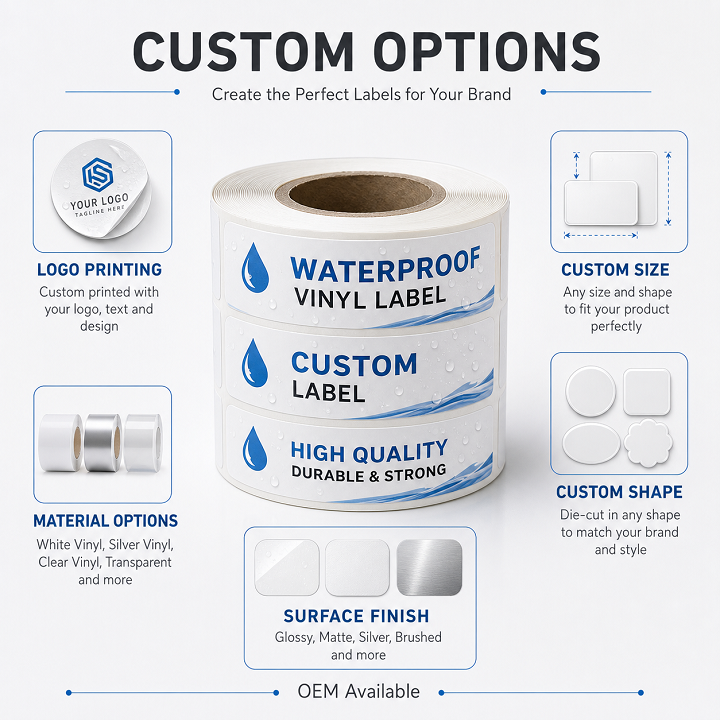
- Label material selection
- Adhesive compatibility
- Custom size and die-cut shape
- Color matching and print method
- Clear-label white ink requirements
- Gloss, matte, laminate, foil, and other finishes
- Sheet, roll, or individual packaging format
- Sample testing before mass production
- Export packaging requirements
- Quality inspection standards
For product details and inquiry support, visit XingKun's [custom waterproof labels page].
Need waterproof labels for bottles, jars, cosmetics, food packaging, cleaning products, or branded promotional items? Send XingKun your artwork, label size, product container material, expected usage environment, and target order quantity. Our team can help recommend a suitable material, adhesive, finish, and production format for your OEM or ODM label project.
Conclusion
Waterproof labels are not one-size-fits-all products. Their success depends on matching the label face stock, adhesive, printing process, protective finish, container surface, and real use environment.
For many food, beverage, cosmetic, and household product applications, BOPP provides an effective balance of durability, print quality, and cost. Vinyl can be valuable for flexible, outdoor, and decal-oriented projects, while polyester/PET is often better suited to industrial, chemical, equipment, and long-life labeling requirements.
The most reliable way to source custom waterproof labels is to define the application precisely, request a complete label specification, and validate samples under real conditions before mass production. This process protects your product presentation, improves supply-chain reliability, and helps ensure your label remains clear and secure from production through customer use.
FAQ
1. Are BOPP labels waterproof?
BOPP is a synthetic, non-porous film that handles moisture far better than ordinary paper labels. It is widely used for beverage, food, cosmetics, and personal-care packaging. However, the finished label's performance also depends on adhesive, ink, coating, label application conditions, and the duration and type of water exposure. Film labels such as BOPP are commonly used where moisture resistance and durability are important. [bluelabelpackaging]
2. What is the best waterproof label material for bottles?
For many beverage, cosmetic, and household-product bottles, white BOPP or clear BOPP is an effective starting point. For squeeze bottles, flexible PE film may be a better fit. For highly demanding industrial or chemical applications, polyester/PET may be more appropriate. The ideal choice depends on bottle material, curvature, temperature, exposure, and required durability.
3. Can waterproof labels be used in the freezer?
Yes, but the label must be designed for freezer conditions. A standard waterproof film does not automatically guarantee performance in freezing temperatures. Specify the application temperature, storage temperature, condensation conditions, container material, and whether labeling occurs before or after freezing. A freezer-grade adhesive may be necessary.
4. Do waterproof labels need lamination?
Not always, but lamination or a protective coating is often recommended where labels will face abrasion, frequent wiping, oils, chemical splashes, or rough handling. A laminate can help protect printed graphics, fine text, barcodes, and QR codes from scuffing and moisture-related wear.
5. Can I print clear waterproof labels with white text?
Yes. Clear waterproof labels can use white ink as an underprint or as a visible design color. White ink is especially important when printing light colors, opaque logos, or readable text on transparent film, dark containers, or colored products. Ask your supplier to create a separate white-ink layer in the artwork.
6. What is the difference between waterproof labels and weatherproof labels?
Waterproof labels are designed primarily to resist water and moisture. Weatherproof labels usually imply broader outdoor performance, such as resistance to rain, humidity, temperature changes, and sometimes UV exposure. If labels will be used outdoors, confirm UV resistance, fade resistance, adhesive performance, and expected outdoor service life rather than relying only on the term "waterproof."
7. Are waterproof labels suitable for chemical containers?
Some are, but not all. Chemical compatibility depends on the exact chemical, concentration, exposure duration, temperature, label material, adhesive, ink, and protective laminate. For hazardous chemical drums or international marine transport, buyers may need a system tested to relevant requirements such as BS 5609. BS 5609 focuses on durable adhesive labels for marine-use chemical labeling and includes saltwater immersion-related testing requirements. [ppg]
References
1. Avery Dennison. "[Durable Goods and Equipment Labels]." Discusses performance requirements for durable labels across hostile environments, temperatures, and service conditions. [label.averydennison]
2. PPG Teslin. "[BS 5609 Certified Labels]." Explains BS 5609 marine-use label requirements, including the three-month saltwater submersion test context. [ppg]
3. Brady. "[British Standard BS 5609 Compliance Overview]." Provides an overview of BS 5609 durability requirements for pressure-sensitive labels used on chemical drums in marine shipping. [bradyid]
4. UL Solutions. "[Marking and Labeling Systems Program]." Describes UL evaluation services for marking and labeling systems and includes reference to BS 5609 label evaluation. [ul]
5. Avery. "[Waterproof Labels]." Describes waterproof film label characteristics, including resistance to chemicals, sun, abrasion, freezer conditions, and extreme temperatures. [avery]
6. Blue Label Packaging. "[Pros and Cons of Different Types of Label Materials]." Compares BOPP, PET, and other label materials for moisture, durability, industrial, beverage, food, and beauty applications. [bluelabelpackaging]
7. XingKun. "[Waterproof Labels]." Product reference page for custom waterproof label inquiries and manufacturing support.


