Content Menu
● What Are Custom Werewolf Game Cards?
● Why Customization Matters
● Core Product Features Buyers Look For
● Common Werewolf Deck Structures
● Design Principles That Improve Gameplay
● Materials and Finishing Options
● Packaging Options That Sell Better
● OEM and ODM Workflow
● Industry Insight: What Buyers Often Overlook
● How XingKun Supports This Product
● Practical Buying Checklist
● Conclusion
● FAQ
>> 1. What are custom werewolf game cards used for?
>> 2. What card size is best for Werewolf decks?
>> 3. Which finish is best for game cards?
>> 4. What packaging works best for custom Werewolf cards?
>> 5. Can a factory handle both OEM and ODM orders?
>> 6. How can I make the deck easier to understand?
● References
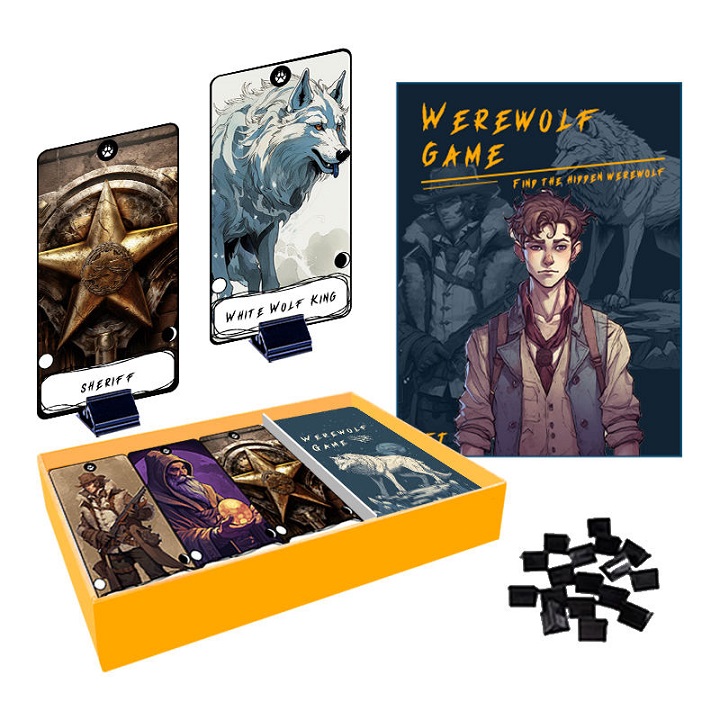
If you are developing a party game, social deduction title, or localized tabletop product, custom werewolf game cards can turn a familiar game format into a distinctive, brandable experience. For OEM and ODM buyers, the real value is not only in the artwork; it is in how the cards feel, how long they last, how clearly players can read them, and how well the packaging supports retail, gifting, and repeat gameplay. [playwerewolf]
What Are Custom Werewolf Game Cards?
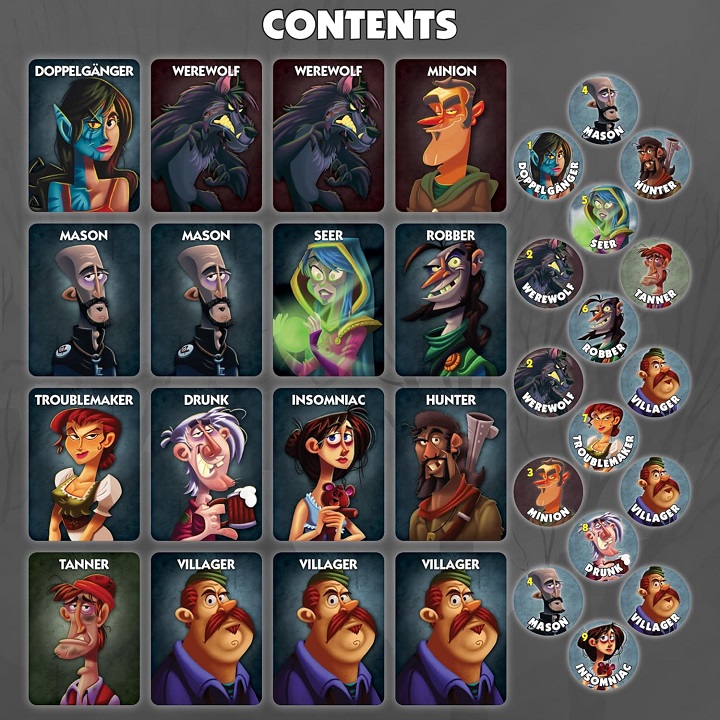
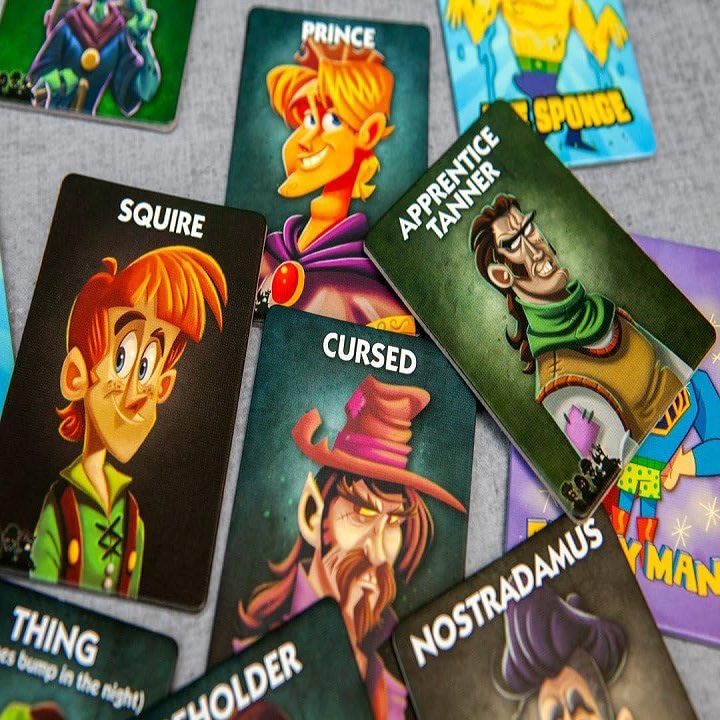
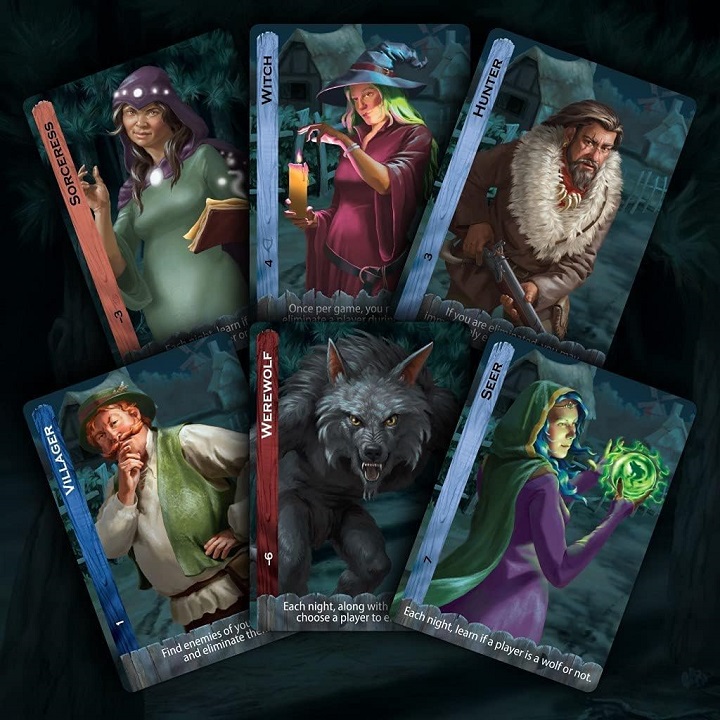
Custom Werewolf game cards are role-based cards used in Werewolf-style social deduction games, where players receive hidden identities and try to outsmart each other through discussion, bluffing, and deduction. A standard set often includes core roles such as Werewolf, Villager, Seer, and other special characters, depending on the edition and game rules. [acelioncardgames]
For brands and publishers, the "custom" part usually means more than changing the card back. It can include the card size, paper stock, finish, language, icon system, box style, and even the count and balance of roles so the deck matches a specific ruleset or target market. That is why the best products are designed from both a gameplay and a manufacturing perspective. [makeplayingcards]
Why Customization Matters
A Werewolf deck succeeds when players instantly understand their roles and stay immersed in the session. Weak customization can cause confusion, slow down the game, and reduce perceived quality, especially if symbols are hard to read or the box does not protect the cards well. Strong customization, by contrast, improves usability, brand recognition, and shelf appeal. [stellarfactory]
From an SEO and product-marketing perspective, buyers also search with commercial intent. Keywords such as custom werewolf game cards, custom card game printing, OEM game cards, and custom tuck box for playing cards match real procurement needs rather than casual browsing. This makes the product page and supporting content important not just for ranking, but for lead quality. [boxprintify]
Core Product Features Buyers Look For
When sourcing custom werewolf game cards, experienced buyers usually evaluate the product in five practical areas. These are the factors that most often affect satisfaction, returns, and repeat orders. [qpmarketnetwork]
Card stock, typically 300–350 gsm for game cards, to balance stiffness and handling feel. [boardgamesmaker]
Finish, such as matte, gloss, UV coating, foil stamping, or embossing for premium editions. [finepackaging.com]
Card size, often poker size for familiar handling and easy shuffling. [youtube]
Packaging, such as tuck boxes or rigid boxes for retail display and storage. [boxprintify]
Role clarity, meaning icons, color coding, and typography that remain readable under low-light party conditions. [playwerewolf]
Common Werewolf Deck Structures
There is no single universal Werewolf deck. Different publishers and party-game systems use different role balances depending on player count and ruleset. That flexibility is a strength, because OEM buyers can tailor a deck to a specific audience. [gameonfamily]
Here is a simple production-oriented reference table:
| Player Count | Typical Deck Direction | Design Priority |
| 7–9 players | Small core deck with basic roles | Fast setup and simple icons |
| 10–15 players | Expanded deck with special roles | Better role separation and balance |
| 16+ players | Larger deck with extra Werewolves or supporting roles | Stronger pacing and replay value |
For example, some Werewolf rule sets recommend at least seven players, with additional Werewolf roles added as the group grows. This is useful for publishers because it lets you build different SKU versions for casual groups, clubs, schools, and retailers. [stellarfactory]
Design Principles That Improve Gameplay
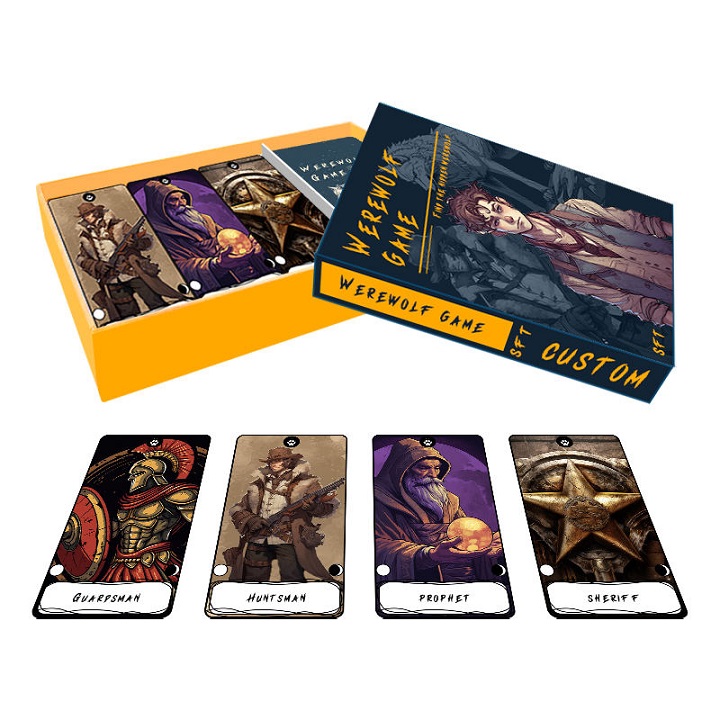
Good Werewolf card design is not only aesthetic. It is also a usability problem. Players often handle the deck in dim rooms, at noisy parties, or during tense social moments, so every visual element must help recognition instantly. [gameonfamily]
To improve gameplay clarity:
1. Use large role names and one dominant symbol per card.
2. Keep the back design consistent and non-revealing.
3. Differentiate teams by color without making the cards look busy.
4. Use iconography that can be understood quickly across languages.
5. Test the layout in real lighting, not just on a screen.
This is where an OEM manufacturer with both printing and packaging experience becomes valuable. XingKun's product scope includes packaging boxes and playing cards, which supports a one-stop workflow from game-card artwork to final pack-out. [cn.linkedin]
Materials and Finishing Options
Material selection directly affects hand feel, durability, and production cost. Industry sources on card-stock selection consistently recommend thicker stocks for better durability and more professional handling, while finishing choices can elevate both shelf appeal and collector value. [alibaba]
A practical sourcing guide is below:
| Component | Recommended Choice | Why It Matters |
| Card stock | 300–350 gsm art board or equivalent game-card stock | Durable and easy to shuffle |
| Finish | Matte or gloss lamination | Protects surface and improves appearance |
| Premium effect | Foil, embossing, spot UV | Helps special editions stand out |
| Box | Tuck box or rigid box | Supports retail, gifting, and storage |
| Protection | Shrink wrap or inner tray | Reduces transit damage |
For premium editions, spot UV, foil stamping, embossing, and textured wraps are common ways to increase perceived value. For mass-market editions, clean printing and stable cutting accuracy often matter more than luxury effects. [finepackaging.com]
Packaging Options That Sell Better
Packaging is often the difference between a playable prototype and a market-ready product. A well-designed tuck box is compact, economical, and suitable for standard card decks, while a rigid box can create a more premium first impression. Buyers in retail and gifting channels tend to care about both protection and presentation. [boardgamesmaker]
Popular packaging options include:
Tuck boxes, for compact and cost-efficient retail packaging. [boxprintify]
Rigid boxes, for premium editions and collector sets. [alibaba]
Window boxes, for visible shelf merchandising when the artwork itself is a selling point. [alibaba]
Custom inserts, for organizing cards, tokens, or rule leaflets.
Shrink-wrapped sets, for cleanliness and distribution protection.
If you want the product to feel more like a professional tabletop release, not just a printed deck, the box structure should be designed together with the card layout from the beginning. [finepackaging.com]
OEM and ODM Workflow
For overseas brands, one of the biggest advantages of working with a Chinese factory is the ability to combine OEM manufacturing, ODM development, and packaging production in a single supply chain. That reduces communication overhead and helps keep artwork, die-lines, proofing, and mass production aligned. [rdcard]
A typical workflow looks like this:
1. Submit the game concept, role list, and target market.
2. Confirm card size, stock, finish, and box type.
3. Prepare artwork and layout files.
4. Review a digital or physical proof.
5. Approve sampling and color checks.
6. Move into mass production and packaging.
7. Ship with final quality inspection and export packing.
This workflow matters because game-card projects fail most often at the handoff points: role balance, typography, trim accuracy, and box sizing. A factory that already produces cards and packaging products can reduce those risks. [printedinchinaonline]
Industry Insight: What Buyers Often Overlook
Many first-time buyers focus heavily on artwork and underestimate the practical details that affect retail success. In real production, the most common mistakes are inconsistent bleed margins, overly dark card backs, box sizes that are too tight, and role cards that are difficult to distinguish at a glance. [qpmarketnetwork]
Another overlooked factor is language localization. If you plan to sell across multiple regions, your role names, icon set, and rules insert should be designed for easy translation. This is especially important for social deduction games, where players need to grasp roles quickly during the first minute of play. [playwerewolf]
How XingKun Supports This Product
Shenzhen XingKun Packing Products Co., Ltd. positions itself as a manufacturer of display stands, packaging boxes, playing cards, and related packaging products, with one-stop service for custom printing and packaging needs. That makes it a suitable partner for brands that need both the game cards and the box system to match in style and production quality. [cn.linkedin]
The company's own site also shows a dedicated Werewolf game cards product page, which indicates product familiarity rather than generic printing capability alone. For buyers, that is useful because a supplier with category-specific experience is more likely to understand role-card readability, deck balance, and box presentation. [acelioncardgames]
Practical Buying Checklist
Before placing an order, use this quick checklist to reduce risk:
Confirm player count and role distribution.
Decide whether the deck is casual, premium, or collector-oriented.
Choose card size and stock based on handling expectations.
Select packaging based on channel: retail, Kickstarter, gift shop, or wholesale.
Ask for sample approval before full production.
Verify color matching, cutting accuracy, and box fit.
Make sure the supplier understands export packaging and OEM/ODM workflow.
This checklist saves time because it pushes product decisions upstream. In printing, small decisions made early usually prevent expensive problems later. [qpmarketnetwork]
Conclusion
Custom Werewolf game cards are a strong product category for tabletop brands because they combine repeatable gameplay with high customization potential. When the deck is designed well, it becomes easier to play, easier to sell, and easier to scale across markets. For brands, publishers, and wholesalers, the best results usually come from treating card design, packaging, and manufacturing as one connected system rather than separate tasks. [stellarfactory]
If your goal is to launch or upgrade a custom werewolf game cards product, the smartest next step is to align your role structure, visual system, packaging style, and production spec before sampling. That is the fastest route to a deck that feels professional, protects margins, and performs well in both retail and direct-to-consumer channels. [cn.linkedin]
FAQ
1. What are custom werewolf game cards used for?
They are used in Werewolf-style social deduction games, where players receive hidden roles and try to identify enemies through discussion and voting. [gameonfamily]
2. What card size is best for Werewolf decks?
Poker size is a common choice because it feels familiar, shuffles well, and fits standard packaging formats. [youtube]
3. Which finish is best for game cards?
Matte and gloss are both popular; matte feels more premium and reduces glare, while gloss can make colors look brighter. [qpmarketnetwork]
4. What packaging works best for custom Werewolf cards?
Tuck boxes are ideal for cost-effective retail packaging, while rigid boxes are better for premium editions or gift sets. [boardgamesmaker]
5. Can a factory handle both OEM and ODM orders?
Yes. Manufacturers that offer OEM and ODM support can produce to your design or help develop the product from concept to final packaging. [xkdisplay]
6. How can I make the deck easier to understand?
Use clear role icons, readable typography, consistent backs, and a layout that can be recognized quickly in real gameplay conditions. [playwerewolf]
References
1. XingKun product page: [Werewolf Game Cards] [acelioncardgames]
2. XingKun company profile: [XingKun Packing Products Co Ltd | LinkedIn] [cn.linkedin]
3. Werewolf rules and setup: [How to Play - Werewolf] [playwerewolf]
4. Werewolf setup guide: [How to Play Werewolf] [stellarfactory]
5. Card stock and printing guidance: [How to Choose the Right Card Stock for Your Custom Card Deck] [qpmarketnetwork]
6. Tuck box and finishing options: [Playing Card Tuck Box] [boxprintify]
7. Packaging and finishing comparison: [Tuck Boxes vs Rigid Boxes for Playing Card Packaging] [finepackaging.com]
8. Custom card game printing and packaging options: [Custom Tuck Box For Poker Size Playing Cards] [boardgamesmaker]
9. Google helpful content guidance: [Creating Helpful, Reliable, People-First Content] [developers.google]


