Content Menu
● Why Source Acrylic Name Plates From China?
● How We Evaluated Suppliers
>> Evaluation dimensions
>> Technical requirements that matter
● Top 10 China Manufacturers and Suppliers
>> 1. Shenzhen XingKun Packing Products Co., Ltd.
>> 2. Dongguan Xianda Packaging Co., Ltd. / Xianda Gift Box
>> 3. Maituohong Packaging / MTH Packaging Box
>> 4. Bonito Packaging
>> 5. WeeTect Material Limited
>> 6. WeProFab
>> 7. Shenzhen YanMing Plate Process Co., Ltd.
>> 8. C.N. Nameplate Co., Limited
>> 9. Shenzhen Ruilisibo Technology Co., Ltd. / MiLabels
>> 10. TALMUD Limited
● Manufacturer Comparison Table
● Buyer's Guide: How to Avoid Costly Errors
>> 1. Do not approve acrylic based on photographs alone
>> 2. Specify the printing side
>> 3. The little-known adhesive trap
>> 4. Verify certificates properly
>> 5. Separate prototype approval from production approval
>> 6. Build a functional specification sheet
>> 7. Plan freight around acrylic's scratch risk
● Common Acrylic Name Plate Problems
>> Material substitution
>> Surface scratches and haze
>> Ink peeling or fading
>> Incorrect white backing
>> Hole-position mismatch
● Final Recommendation
● Frequently Asked Questions
>> 1. How can I verify whether a supplier's ISO certificate has expired?
>> 2. Is cast acrylic always better than extruded acrylic for name plates?
>> 3. Should I choose laser engraving, UV printing, or screen printing?
>> 4. What MOQ should I expect for custom acrylic name plates from China?
>> 5. Can a supplier provide RoHS or REACH documentation for acrylic name plates?
● References
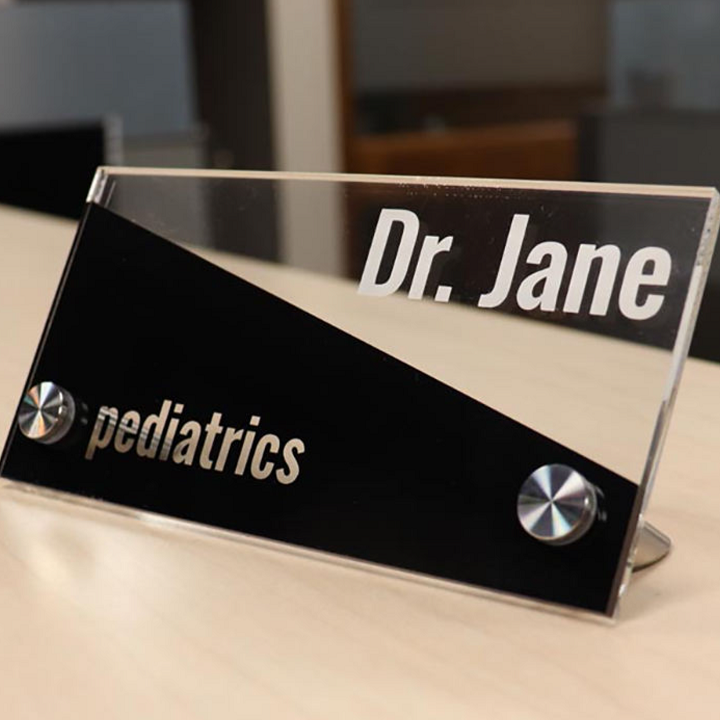
China remains one of the most practical sourcing regions for custom acrylic name plates because it combines acrylic-material supply, printing, laser processing, CNC fabrication, packaging, and export logistics in one manufacturing ecosystem. For procurement teams seeking a dependable long-term partner—not simply the lowest quotation—the key is to evaluate material traceability, process control, customization depth, response speed, and delivery consistency.
This guide reviews ten China-based suppliers and adjacent manufacturing partners relevant to acrylic name plates, custom labels, panels, branded identification plates, retail display plates, and related OEM projects. It is designed for purchasing managers, product developers, distributors, equipment brands, and project buyers who need to balance quality, flexibility, compliance documentation, MOQ, and total landed cost.
Why Source Acrylic Name Plates From China?
Acrylic name plates are used in industrial equipment, consumer electronics, retail displays, hospitality signage, office identification, packaging, appliances, promotional products, furniture, and branded point-of-sale applications. Depending on the end use, a plate may need to withstand cleaning chemicals, UV exposure, repeated handling, heat, humidity, abrasion, or outdoor installation.
China's advantage is not limited to lower unit pricing. The greater value lies in its manufacturing clusters, where a buyer can often source acrylic sheet, printing, laser cutting, engraving, UV finishing, die cutting, adhesives, protective films, packaging, and export handling through coordinated supply chains.
The Pearl River Delta—particularly Shenzhen, Dongguan, Guangzhou, Huizhou, and nearby cities—has a strong concentration of electronics, printing, packaging, signage, display, plastic-processing, and export-oriented factories. This helps buyers combine acrylic name plates with packaging, product inserts, labels, display structures, or retail presentation materials in fewer shipments and with less coordination risk.
China's goods imports and exports reached RMB 45,468.7 billion in 2025, up 3.8% year on year, illustrating the continued scale of its export manufacturing and logistics network. For buyers, this scale can translate into more options for production capacity, freight consolidation, and specialized finishing processes—provided supplier qualification is handled carefully.
Acrylic name plate sourcing should be treated as an engineering and quality-control project, not merely a graphic-printing order. A visually attractive sample can still fail in real use if it uses the wrong PMMA grade, insufficient ink adhesion, low-performance adhesive, weak protective-film control, or inaccurate mounting tolerances.
How We Evaluated Suppliers
The manufacturers below are not ranked solely by size or marketing claims. They are presented as potential sourcing options for different project types. Buyers should independently verify current certificates, manufacturing location, audit results, actual lead time, and capability for their exact design before placing a production order.
Evaluation dimensions
| Evaluation area | What professional buyers should verify | Why it matters |
| Manufacturing specialization | Whether the supplier actually makes acrylic name plates, panels, labels, displays, or only trades them | Direct manufacturing normally improves process visibility and technical communication |
| Material capability | Cast vs. extruded PMMA, sheet thickness, color consistency, recycled-content policy, UV stability | Acrylic quality affects clarity, laser edge quality, flatness, cracking resistance, and service life |
| Decoration process | UV printing, silk screening, reverse printing, laser engraving, digital printing, hot stamping, doming | The right process depends on artwork complexity, expected abrasion, and operating environment |
| Cutting and finishing | Laser cutting, CNC routing, die cutting, flame polishing, diamond polishing, drilling, countersinking | Edge quality and dimensional repeatability influence assembly and perceived product quality |
| Quality control | Incoming-material inspection, first-article approval, in-process checks, final AQL inspection | Prevents color drift, scratches, burrs, mismatched adhesives, and mounting-hole errors |
| Documentation | Material specifications, RoHS/REACH declarations where applicable, inspection reports, certificate verification | Essential for regulated products, export projects, and supplier accountability |
| Delivery reliability | Sampling time, production lead time, holiday planning, capacity planning, packing standards | A low price has little value if a name plate delays equipment assembly or retail launch |
| OEM/ODM support | Drawing review, artwork assistance, prototype development, packaging support, revision responsiveness | Particularly important for small and medium-sized brands without in-house manufacturing engineers |
Technical requirements that matter
Acrylic name plates are commonly made from PMMA, often called acrylic, plexiglass, or organic glass. However, the term "acrylic" alone does not define performance. A buyer should specify the material and acceptance criteria rather than rely on a generic product description.
Important specifications may include:
- Material type: Cast PMMA generally provides better optical clarity, machining behavior, and chemical resistance than some lower-cost extruded alternatives. Extruded PMMA may still be suitable for many standard indoor applications but should be approved based on actual use conditions.
- Thickness tolerance: A 1 mm plate and a 1.5 mm plate may look similar in photographs but behave very differently during laser cutting, mounting, packaging, and installation.
- Color and opacity: Transparent, frosted, translucent, solid-color, mirrored, and fluorescent acrylic all require different print-opacity and backing strategies.
- Printing location: Reverse printing on the back of a clear acrylic plate protects graphics from surface abrasion and is often preferred for front-facing badges, control panels, and branded plates.
- Ink adhesion: Ask for cross-hatch adhesion-test information or a production sample tested on the actual acrylic grade.
- Adhesive system: Double-sided foam tape, acrylic adhesive tape, transfer tape, magnetic backing, screws, rivets, or standoffs all have different surface-preparation and load requirements.
- Operating conditions: Indoor, outdoor, marine, kitchen, industrial, refrigerated, high-humidity, or high-temperature applications need different material, ink, and adhesive combinations.
- Compliance documentation: RoHS relates to the restriction of specific hazardous substances in electrical and electronic equipment. CE marking is not a blanket material certificate; it applies to certain products placed on the European market and should not be requested blindly for an acrylic plate that is not itself within a relevant CE product category. Buyers should request applicable declarations and test reports based on the final product and market.
Online supplier listings commonly show combinations of ISO 9001, ISO 14001, ISO 45001, CE, and RoHS claims, but purchasers should verify which credential applies to the factory, product, material, or customer-specific test report.
Top 10 China Manufacturers and Suppliers
1. Shenzhen XingKun Packing Products Co., Ltd.
Best suited for: Small and medium-sized brands, distributors, packaging-linked nameplate projects, custom promotional name plates, retail identity plates, and buyers requiring responsive OEM coordination.
Shenzhen XingKun Packing Products Co., Ltd. is an established printing and packaging manufacturer founded in 2004. The company provides custom product solutions that include nameplates, stickers, labels, display stands, paper boxes, plastic boxes, brochures, badges, and other printed or branded components. Its positioning is especially relevant for buyers that need acrylic name plates as part of a wider product-presentation, packaging, retail-display, or brand-launch program rather than as a standalone industrial component.
The company reports a 3,000-square-meter operating area, annual output exceeding 10 million units, and exports to more than 30 countries. Its published equipment includes Heidelberg CD102 four-color and Heidelberg XL75 six-color presses, indicating a strong foundation in color-managed commercial printing and branded visual output.
Its practical strength is flexibility. For growing brands and lower-to-medium-volume custom programs, a supplier's communication speed, design coordination, artwork review, packaging integration, and willingness to support multiple SKUs can be as important as the lowest per-piece cost. XingKun is positioned to offer one-stop coordination across nameplates, labels, printed inserts, paper packaging, plastic packaging, and display-related products.
Core strengths
- More than 20 years of printing and packaging experience since 2004.
- Suitable for custom OEM and ODM projects requiring coordinated printing, labels, nameplates, packaging, and display components.
- Published ISO 9001 and FSC certification claims; buyers should request current certificate copies and scope details during supplier onboarding.
- Supports low-volume customization as well as larger production requirements.
- Published production and delivery target of approximately 7–15 days for applicable custom packaging projects; actual acrylic name plate timing should be confirmed against material, finishing, quantity, and approval cycle.
- Experience serving international customers across more than 30 countries.
Recommended buyer profile
Choose Shenzhen XingKun when you need a cost-conscious but service-oriented manufacturer that can support artwork-driven OEM customization, branded presentation, product packaging coordination, and iterative communication. It is particularly relevant where the acrylic name plate is one element within a wider commercial print or packaging project.
2. Dongguan Xianda Packaging Co., Ltd. / Xianda Gift Box
Best suited for: Brands needing acrylic name plate packaging, retail presentation components, gift-oriented branding, or custom printed-box integration.
Dongguan Xianda Packaging Co., Ltd., represented through xiandagiftbox.com, was established in 2006 and operates two factories in Dongguan, according to its published company information. The company specializes primarily in custom packaging products such as flower boxes, gift boxes, jewelry boxes, ring boxes, tube boxes, and other brand-oriented printed packaging.
While it is not positioned as a dedicated industrial acrylic nameplate producer, it can be a relevant sourcing partner for projects where acrylic plates are used in premium packaging, product kits, gifting, retail displays, presentation boxes, or branded inserts. Its OEM/ODM customization claims include logo execution through processes such as hot stamping, printing, embossing, UV coating, silk screening, and stickers.
Core strengths
- Established in 2006 with a long operating history in custom packaging.
- Strong fit for gift packaging, jewelry, cosmetics, premium retail, and presentation-oriented product programs.
- Custom logo and finishing capability may be useful for nameplate-plus-packaging projects.
- Located in Dongguan, close to Shenzhen's electronics, display, print, and export ecosystem.
- Reported OEM and ODM support for customer-provided artwork and customized sizes, colors, and logo treatments.
Recommended buyer profile
Use Xianda as a potential partner when the primary need is not only an acrylic name plate, but a packaged brand experience. Obtain samples early to evaluate whether its acrylic sourcing and finishing execution meet the durability requirements of your final application.
3. Maituohong Packaging / MTH Packaging Box
Best suited for: International brands needing nameplate-related packaging, rigid-box presentation, printed inserts, and stable paper-packaging capacity.
Maituohong Packaging, represented by mthpackagingbox.com, is a Shenzhen-based custom paper-packaging manufacturer. The company states that it has more than 15 years of experience, a 15,000-square-meter factory, more than 200 workers, Heidelberg printing equipment, ISO 9001 certification, and FSC certification.
Its production focus includes rigid gift boxes, magnetic boxes, drawer boxes, folding cartons, corrugated mailers, paper bags, and packaging inserts. This makes it a useful adjacent supplier for buyers sourcing acrylic name plates for boxed consumer products, premium kits, point-of-sale packs, or brand-launch sets.
Core strengths
- Reported 15,000-square-meter factory and 200+ employees, supporting higher-volume packaging programs.
- ISO 9001 and FSC claims should be independently validated through current documentation.
- Strong capacity for rigid boxes, folding cartons, corrugated packaging, and retail inserts.
- Familiarity with North American and European market requirements, according to its published information.
- Suitable for combining name plates, instruction cards, foam inserts, and premium product packaging.
Recommended buyer profile
MTH Packaging Box may be a practical sourcing choice when acrylic name plates need to arrive in a retail-ready or protective presentation package. It is more likely to be a packaging-led partner than a dedicated acrylic nameplate engineering specialist, so confirm materials, adhesive capability, engraving quality, and nameplate-specific inspection standards before award.
4. Bonito Packaging
Best suited for: Premium packaging programs, e-commerce presentation, cosmetics, retail, and product-launch packaging associated with branded identification components.
Bonito Packaging presents itself as a provider of premium, custom packaging solutions for brands. Its public material highlights product categories including mailer boxes, folding cartons, rigid boxes, and customized e-commerce and retail packaging.
For acrylic name plate buyers, Bonito Packaging is most relevant where the objective is branded presentation rather than industrial equipment identification. A name plate can be paired with a rigid box, branded insert, product sleeve, display card, or e-commerce unboxing system.
Core strengths
- Focus on premium customized packaging and brand presentation.
- Relevant product mix for mailers, folding cartons, rigid boxes, and e-commerce packaging.
- May support packaging-development projects where an acrylic plate is incorporated into the final retail experience.
- Suitable for brands that require packaging design coordination alongside manufacturing.
Recommended buyer profile
Consider Bonito Packaging for presentation-led nameplate projects, especially luxury, cosmetics, consumer products, subscription boxes, and online retail. Ask for details of acrylic fabrication partners, in-house versus outsourced process steps, sample lead time, and quality-accountability arrangements before finalizing a purchase order.
5. WeeTect Material Limited
Best suited for: Custom acrylic name plates requiring multiple marking methods, including UV printing, laser engraving, digital printing, screen printing, and sublimation.
WeeTect markets custom acrylic name plates and describes a range of decoration methods including UV printing, laser engraving, digital printing, screen printing, and sublimation printing. Its published description specifically positions laser engraving as a more permanent marking option and UV printing as suitable for vivid graphics.
For buyers that require multiple process options under one supplier conversation, this is valuable. Different visual and durability requirements call for different methods: reverse UV printing for protected graphics, laser engraving for permanent text, and silk-screen printing for repeatable solid-color designs.
Core strengths
- Explicit acrylic name plate product focus.
- Multiple decoration options: UV, laser, digital, screen, and sublimation printing.
- Suitable for buyers comparing durability and visual effect across different nameplate-production methods.
- Potential fit for equipment labels, office plates, retail identifiers, branded plaques, and project-specific acrylic signage.
Recommended buyer profile
Choose WeeTect when your engineering team needs to compare print, engraving, and custom-material options. Request physical samples of every process under consideration, not merely product photographs, especially if the finished plate will face frequent cleaning, abrasion, UV exposure, or handling.
6. WeProFab
Best suited for: Drawing-based acrylic fabrication, customized dimensions, prototype development, and plate projects requiring laser-cutting or engraving workflows.
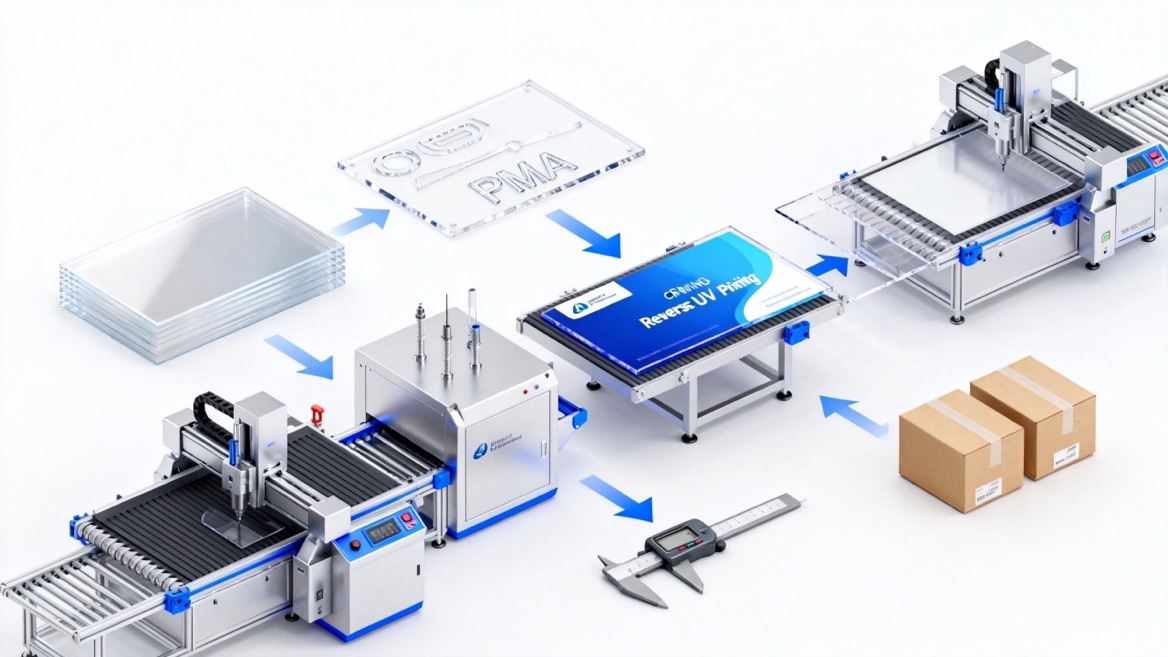
WeProFab promotes custom acrylic name plate production based on customer drawings, with options across styles, designs, sizes, and colors. Its published process description includes selecting acrylic sheet, cutting to size, edge smoothing, adding print or engraving, and final cleaning and polishing.
This production sequence reflects the important stages buyers should evaluate in any acrylic fabrication project: material selection, accurate cutting, edge finishing, decoration, cleaning, protective packaging, and inspection.
Core strengths
- Custom fabrication based on buyer designs and drawings.
- Relevant for dimensional customization, acrylic machining, engraving, and polished-edge requirements.
- May be suitable for prototypes, custom office plates, branded blocks, equipment plates, and display-oriented applications.
- Buyer-facing production explanation can help technical teams structure a request for quotation.
Recommended buyer profile
Use WeProFab for projects where geometry, size, edge treatment, or laser/CNC fabrication is central to the design. Supply vector artwork and dimensional drawings that clearly show thickness, tolerances, hole sizes, countersinks, printing side, finish, protective film, and mounting method.
7. Shenzhen YanMing Plate Process Co., Ltd.
Best suited for: Industrial control panels, graphic overlays, mixed-material nameplates, etched components, and projects that combine acrylic panels with metal identification parts.
Shenzhen YanMing Plate Process Co., Ltd. is associated with metal etching, acrylic panels, graphic overlays, and nameplates. Its public information indicates experience with acrylic/glass panels, panel graphic overlays, die-cutting parts, plastic nameplates, and metal nameplates, with facilities in the Shenzhen-Dongguan manufacturing region.
The company is particularly relevant where a buyer needs more than a decorative acrylic plate—for example, a control-panel overlay, membrane-switch assembly, equipment faceplate, or industrial identifier that may involve metal, adhesive, die cutting, and precision graphic registration.
Core strengths
- Mixed-material capability involving acrylic panels, graphic overlays, plastic nameplates, and metal nameplates.
- Potential fit for industrial equipment, electrical enclosures, machinery, instruments, and control panels.
- Location in the Shenzhen/Dongguan industrial corridor supports access to electronics and component manufacturing.
- Chemical etching expertise can be valuable for projects requiring metal plus acrylic components.
Recommended buyer profile
Consider YanMing for technical applications where acrylic is part of an engineered panel system. Buyers should ask for tolerance capability, electrical or flame-retardancy requirements where relevant, adhesive recommendations, environmental test data, and first-article inspection documentation.
8. C.N. Nameplate Co., Limited
Best suited for: Industrial nameplate programs requiring metal, flexible labels, membrane switches, panels, badges, and one-stop OEM component sourcing.
C.N. Nameplate Co., Limited states that it has more than 20 years of experience producing custom metal nameplates, flexible labels, membrane switches, panels, badges, and signs. It also describes a one-stop production line encompassing moulding, hydraulic pressing, stamping, die casting, plating, painting, enameling, welding, polishing, oxidation, and assembly.
Although the company's strongest public positioning is broader industrial nameplate and component manufacturing rather than acrylic plates alone, this may be an advantage for a buyer that wants to evaluate acrylic, metal, flexible, and membrane solutions side by side.
Core strengths
- More than 20 years of nameplate-related experience claimed.
- Broad manufacturing process range for metal and industrial identification products.
- Useful for OEM buyers with multi-material SKU portfolios.
- Publicly claims ISO 9001 and ISO 14000 system certification history; request valid current certificates, issuing body, scope, and audit date.
Recommended buyer profile
C.N. Nameplate is relevant for equipment makers and industrial brands that need consistent identification components across different materials. Do not assume a standard acrylic name plate and a metal industrial plate require the same specification; issue separate data sheets and acceptance standards.
9. Shenzhen Ruilisibo Technology Co., Ltd. / MiLabels
Best suited for: Low-to-medium MOQ custom nameplates, engraved plastic tags, logo labels, and flexible custom-service requirements.
Shenzhen Ruilisibo Technology Co., Ltd., represented through milabels.com, offers custom name plates and product categories including anodized aluminum labels, engraved printing name plates, plastic tags, and flexible printing options. Its page also references low MOQ availability for certain engraved plastic-tag products.
This type of supplier can be relevant for brands in the sampling stage, replacement-part programs, smaller equipment runs, pilot launches, or mixed assortments where minimum-order flexibility is important.
Core strengths
- Custom nameplate and engraved plastic-tag orientation.
- Reported low-MOQ options for selected engraved products.
- Useful for comparing metal and plastic identification solutions.
- Potential fit for machine labels, logo tags, switch indications, and compact industrial markers.
Recommended buyer profile
Use MiLabels for custom projects that need flexibility in quantity or a mixture of engraved plastic and metal labels. Confirm whether low MOQ applies to your exact dimensions, colors, adhesive type, and process, because tooling, screen setup, and material purchases can change minimum quantities significantly.
10. TALMUD Limited
Best suited for: Larger-volume acrylic signage, customized acrylic signs, branded visual displays, and projects where daily throughput is a major consideration.
TALMUD describes itself as a custom acrylic sign manufacturer founded in 2005. It states a daily manufacturing capacity of 30,000 pieces and positions itself around bespoke acrylic signs with CMYK printing.
Acrylic signs and acrylic name plates overlap in material and fabrication methods, but the buyer should clearly distinguish between a decorative sign project and a precision nameplate program. If your product requires tight hole-position tolerance, fine text, reverse printing, serial-variable data, chemical resistance, or specialized adhesive systems, those requirements must be stated in the RFQ.
Core strengths
- Founded in 2005, according to public company information.
- Reported daily capacity of 30,000 pieces.
- Focus on custom acrylic signs and CMYK printing.
- Suitable for retail signage, display branding, office identification, and higher-volume visual applications.
Recommended buyer profile
TALMUD may suit buyers looking for scalable acrylic sign production with strong visual-print requirements. Request samples in your exact thickness, color, print style, protective-film condition, and packing configuration before committing to a volume program.
Manufacturer Comparison Table
The figures below should be used as an initial inquiry framework, not as guaranteed commercial terms. Capacity and MOQ are highly dependent on size, thickness, process, color count, tooling, printing method, adhesive, packaging, and seasonality. Every buyer should request written confirmation for the exact SKU.
| Manufacturer | Primary focus | Indicative production suitability | MOQ approach | Published certification or compliance information | OEM/ODM scope |
| Shenzhen XingKun Packing Products Co., Ltd. | Nameplates, labels, printing, packaging, displays | Low to high volume; company reports annual output above 10 million units | Flexible for custom and lower-volume programs; confirm by SKU | ISO 9001 and FSC claims | Deep customization across printing, labels, packaging, displays, and nameplates |
| Dongguan Xianda Packaging Co., Ltd. | Gift boxes and custom packaging | Medium to high packaging volume | Quote-based | Verify directly | OEM/ODM packaging, logo finishing, presentation projects |
| Maituohong Packaging | Rigid boxes, cartons, mailers, packaging inserts | Higher-volume packaging; reports 15,000 m² facility and 200+ workers | Quote-based | ISO 9001 and FSC claims | Packaging-led OEM, inserts, retail presentation |
| Bonito Packaging | Premium custom packaging | Medium to high packaging programs | Quote-based | Verify directly | Packaging design, retail, e-commerce, rigid and folding boxes |
| WeeTect | Acrylic name plates | Low to medium custom nameplate programs | Quote-based | ISO documentation referenced publicly; verify scope | UV, laser, digital, screen, and sublimation processes |
| WeProFab | Custom acrylic fabrication | Prototype to medium volume | Quote-based | Verify directly | Drawing-based acrylic fabrication, cutting, engraving, polishing |
| Shenzhen YanMing Plate Process | Panels, overlays, metal and plastic nameplates | Medium to high technical component runs | Quote-based | Verify directly | Industrial panels, overlays, etched and mixed-material components |
| C.N. Nameplate Co., Limited | Industrial nameplates and labels | Medium to high industrial OEM runs | Quote-based | ISO 9001 and ISO 14000 claims | Metal, flexible labels, panels, badges, membrane-switch-related items |
| Shenzhen Ruilisibo Technology / MiLabels | Custom labels and engraved plastic/metal tags | Low to medium volume | Low MOQ may be available for selected items | Verify directly | Engraved tags, plastic nameplates, logo labels |
| TALMUD Limited | Acrylic signs and printed acrylic products | Medium to high volume; reports 30,000 pieces/day | Quote-based | Verify directly | Custom acrylic signs, CMYK printing, branded display applications |
Buyer's Guide: How to Avoid Costly Errors
1. Do not approve acrylic based on photographs alone
One of the most common sourcing mistakes is approving a product based on digital renderings or photos. Clear acrylic can look almost identical in a photograph regardless of whether it is cast PMMA, extruded PMMA, recycled-content material, lower-grade sheet, or an unsuitable thickness.
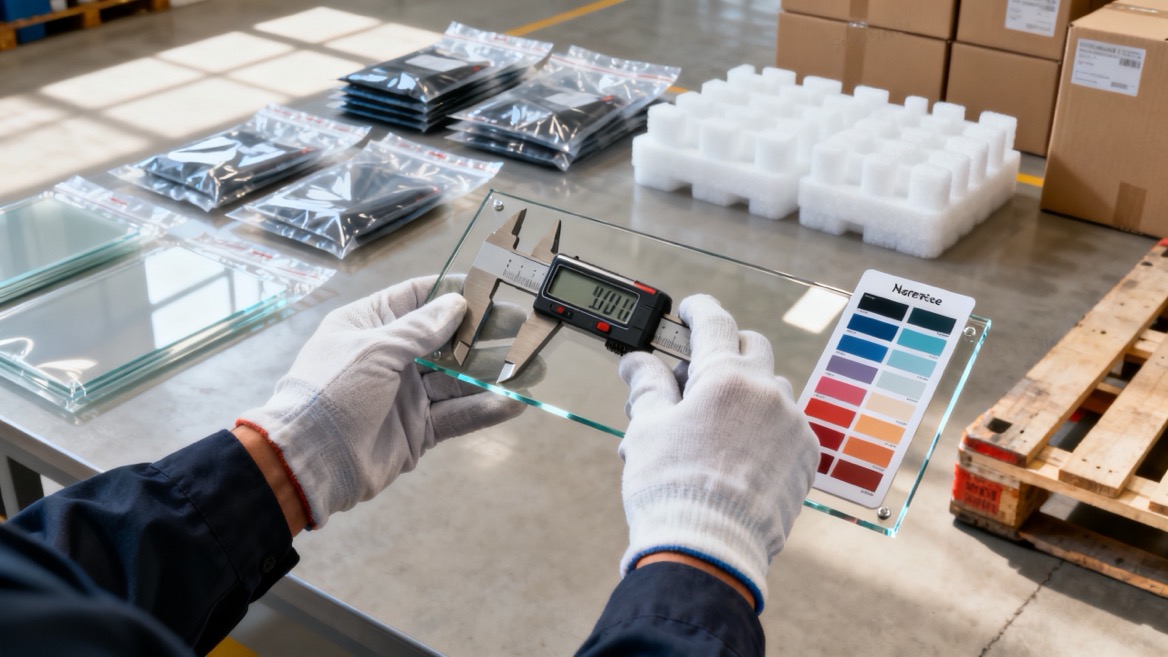
Request a physical sample set that includes:
- The exact acrylic thickness.
- The intended clear, frosted, colored, mirrored, or translucent material.
- The final printing method.
- The final adhesive or mounting system.
- Protective film on both sides where applicable.
- The actual edge finish.
- The planned packaging configuration.
- A comparison against an approved color reference or Pantone target where color is critical.
2. Specify the printing side
This is an industry detail that is often omitted from online quotations but can determine whether a plate lasts months or years.
For a clear acrylic name plate, buyers commonly choose between:
- Front printing: Graphics are printed on the viewing surface. This may create a tactile effect but exposes the ink to abrasion, cleaning, fingerprints, and scratches.
- Reverse printing: Graphics are printed on the back of transparent acrylic. The clear acrylic front acts as a protective layer, generally improving scratch resistance and preserving visual depth.
- Sandwich construction: Two acrylic layers or acrylic-plus-print-layer assemblies are used for enhanced durability, depth, or special visual effects.
If reverse printing is required, the artwork must be mirrored, color sequence must be planned correctly, and white backing may be required behind color layers to prevent transparency or color shift.
3. The little-known adhesive trap
A widely overlooked issue is that an acrylic plate can pass a factory peel test but fail after installation because the buyer did not specify the mounting surface.
Acrylic adhesive tapes perform differently on:
- Powder-coated metal.
- Textured plastic.
- Silicone-treated surfaces.
- Low-surface-energy plastics such as PP or PE.
- Oil-contaminated machinery housings.
- Rough wood or painted walls.
- Curved surfaces.
- Cold or humid installation conditions.
A 3M-type tape label on a quotation is not enough. Ask for the tape series, width, thickness, supplier source, storage conditions, surface-cleaning recommendation, and dwell-time requirements. If the plate is mounted to powder-coated metal or low-surface-energy plastic, require an application test on the real substrate.
Practical rule: A name plate should never be approved with adhesive backing until it has been installed on the buyer's actual product surface for a minimum agreed test period.
4. Verify certificates properly
A valid certificate should be treated as a document to inspect, not a logo to trust.
For ISO certificate verification, ask the supplier for:
- A complete, current certificate PDF.
- Legal company name matching the quotation and bank-account entity.
- Certificate number.
- Certification body name.
- Scope of certification.
- Issue date and expiration date.
- Factory address shown on the certificate.
- A public verification link or certification-body contact route where available.
The scope matters. A certificate for "packaging production" may not automatically demonstrate control over outsourced acrylic cutting, UV printing, or adhesive application. If critical processes are outsourced, ask how suppliers are qualified and how incoming batches are inspected.
5. Separate prototype approval from production approval
A prototype may be hand-finished, produced slowly, or made using a different machine and material batch than mass production. To reduce this risk, use a staged approval process:
1. Approve technical drawings and artwork.
2. Approve raw material and thickness.
3. Approve a first physical prototype.
4. Approve a pre-production sample made using intended production processes.
5. Approve golden sample limits for color, surface defects, edge quality, and dimensions.
6. Define an inspection standard before full production.
7. Conduct final inspection before shipment for important or high-volume orders.
6. Build a functional specification sheet
A purchase order should include more than size and logo artwork. A strong acrylic name plate specification sheet should define:
| Specification item | Example requirement |
| Material | 2.0 mm clear cast PMMA, UV-stabilized if required |
| Dimensions | 120 mm × 35 mm, tolerance ±0.20 mm |
| Corner radius | R3 mm |
| Cutting | Laser cut, no visible yellowing or sharp burrs |
| Edge finish | Polished, clean, without cracks or chips |
| Printing | Reverse UV print, CMYK plus white backing |
| Color target | Pantone reference or approved physical standard |
| Adhesive | Defined double-sided tape series, full-coverage or specified pattern |
| Mounting | Four holes, diameter 4.0 mm, position tolerance ±0.15 mm |
| Protection | Protective film on face; no residue after removal |
| Inspection | AQL level or agreed defect classification |
| Packaging | Individual polybag, anti-scratch separator, export carton |
| Testing | Adhesion, rub resistance, dimensions, visual check, packaging drop test if needed |
7. Plan freight around acrylic's scratch risk
Acrylic is lightweight but scratch-prone. Freight damage frequently occurs because plates shift inside a bag, protective film is removed too early, printed surfaces contact each other, or cartons are crushed.
For export shipments:
- Require protective film to remain in place until final installation where possible.
- Use individual bags, tissue separators, foam sheets, or compartment trays for high-gloss pieces.
- Specify carton burst strength and internal packing method for large or fragile plates.
- Ask for carton dimensions, gross weight, and palletization plan before booking freight.
- For urgent samples, use express couriers; for repeat production, compare air freight, consolidated sea freight, and full-container shipping based on volume and delivery date.
- Confirm Incoterms clearly. "DDP" quotations can be convenient, but buyers should understand who is acting as importer of record and how taxes, duties, and compliance are handled.
Common Acrylic Name Plate Problems
Material substitution
A supplier may quote a premium-looking acrylic sample but use a thinner, lower-grade, or more brittle sheet in production. This can cause cracking around drilled holes, poor edge clarity, warping, yellowing, or inconsistent color.
How to prevent it: Require a material specification, retain an approved sample, and ask for incoming-material traceability or supplier documentation for critical programs.
Surface scratches and haze
Clear acrylic reveals scratches more easily than opaque materials. Improper stacking, weak protective film, dust contamination, and rough manual handling can reduce perceived quality significantly.
How to prevent it: Specify scratch acceptance criteria, protective-film requirements, individual packing, and final visual inspection under controlled lighting.
Ink peeling or fading
Poor surface treatment, incompatible ink, insufficient curing, and front-surface printing can lead to peeling or fading. This risk increases when plates are exposed to cleaning chemicals, oils, UV light, heat, or regular contact.
How to prevent it: Request adhesion and rub testing, identify cleaning chemicals, choose reverse printing where suitable, and test samples under simulated use conditions.
Incorrect white backing
For reverse-printed clear acrylic, white ink often acts as an opacity layer behind CMYK graphics. If the white backing is incomplete, colors can appear transparent, dull, or inconsistent against different mounting surfaces.
How to prevent it: Approve the print-layer sequence and test the plate against the actual installation background.
Hole-position mismatch
A name plate may be visually correct but unusable if mounting holes do not align with the product housing.
How to prevent it: Provide dimensioned CAD drawings, identify datum points, define tolerances, and request a first-article measurement report.
Final Recommendation
The right acrylic name plate manufacturer is not necessarily the supplier with the lowest unit price. The stronger long-term choice is the factory that can consistently reproduce the approved material, color, dimensions, edge condition, printing method, adhesive system, packaging standard, and delivery schedule.
For buyers seeking flexible customization, responsive project communication, integrated printing and packaging support, and OEM/ODM collaboration for small-to-medium brand programs, Shenzhen XingKun Packing Products Co., Ltd. is a practical first supplier to evaluate. Its long operating history, multi-category production model, Heidelberg printing capability, export reach, and ability to coordinate nameplates with labels, packaging, and display components make it particularly relevant for complex branded-product projects.
Before moving to mass production, send a detailed RFQ, request a material-and-process sample, validate documents, approve a pre-production sample, and define measurable acceptance criteria. This approach gives purchasing teams a clearer basis for comparing suppliers and reduces the risk of avoidable quality failures after shipment.
Frequently Asked Questions
1. How can I verify whether a supplier's ISO certificate has expired?
Ask for the complete certificate, not a website logo. Check the legal entity name, factory address, certificate number, certification body, scope, issue date, and expiry date. Then use the certification body's verification system if available or contact the certification body directly. Also confirm that the certificate covers the manufacturing location that will actually produce your order.
2. Is cast acrylic always better than extruded acrylic for name plates?
Not always, but cast acrylic is often preferred for premium visual applications, precise machining, engraved work, and projects requiring strong optical clarity. Extruded acrylic can be cost-effective for standard indoor plates. The correct choice depends on thickness, design, environment, budget, cutting method, and whether the part will be drilled, bent, engraved, or exposed to stress.
3. Should I choose laser engraving, UV printing, or screen printing?
Choose based on performance requirements rather than appearance alone. Laser engraving provides permanent marking and can be useful for text, serial numbers, or abrasion-sensitive information. UV printing supports full-color graphics and fine details. Screen printing can be suitable for repeat designs, solid colors, and larger production runs. For highly durable clear plates, reverse UV printing is often worth evaluating.
4. What MOQ should I expect for custom acrylic name plates from China?
MOQ depends on material purchasing, print setup, cutting method, color count, tooling, packaging, and size. Simple laser-cut or engraved samples may be available in low quantities, while silk-screen printing, die cutting, special adhesives, and custom packaging usually require higher order quantities to become cost-efficient. Request tiered quotations for 100, 500, 1,000, 3,000, and 10,000 pieces.
5. Can a supplier provide RoHS or REACH documentation for acrylic name plates?
Potentially, but the documentation should be specific. Ask whether the declaration applies to the PMMA sheet, ink, adhesive, finished plate, or the entire bill of materials. For regulated end products, request supporting material declarations, test reports where needed, and a signed declaration that identifies the exact SKU and manufacturing date or batch.
References
- [National Bureau of Statistics of China: 2025 national economic and trade data] [stats.gov]
- [State Council of the People's Republic of China: 2025 industrial output statistics] [english.www.gov]
- [Shenzhen XingKun Packing Products Co., Ltd.: Company profile and manufacturing information] [xkdisplay]
- [MTH Packaging Box: Factory information and custom packaging capability] [mthpackagingbox]
- [WeeTect: Acrylic name plate manufacturing processes] [weetect]
- [Made-in-China: Acrylic name plate supplier and certification marketplace overview] [made-in-china]


