Content Menu
● Standard Playing Card Size at a Glance
>> Why Poker Size Became the Default
● Poker Size vs. Bridge Size
>> Which Is Better: Poker or Bridge Size?
● Is There a Worldwide Playing Card Standard?
● Standard Card Size for Printing
>> Why Bleed and Safe Areas Matter
● How Card Size Affects Deck Usability
>> Hand Feel and Shuffling
>> Text and Icon Readability
>> Packaging Fit
● Choosing the Right Size for a Custom Deck
>> Step 1: Define the Main Use
>> Step 2: Map the Content to the Format
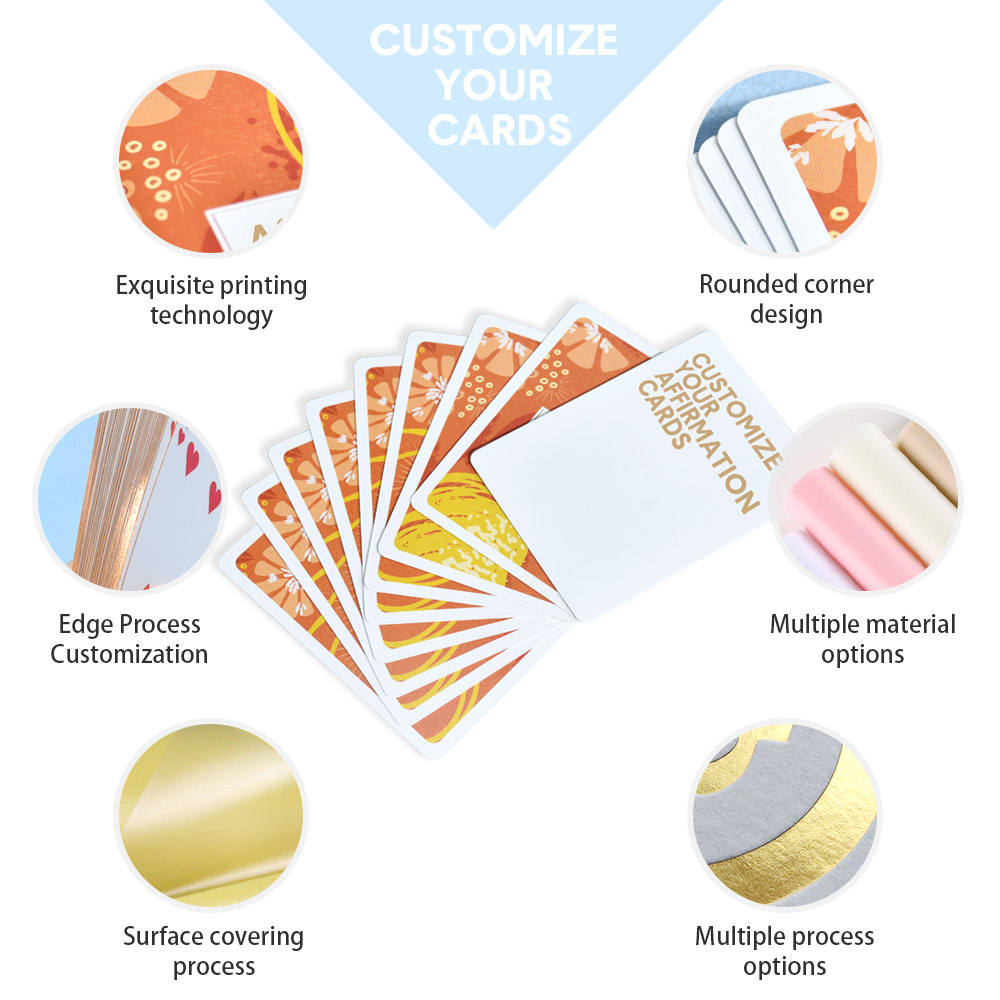
>> Step 3: Select Stock and Finish
● Manufacturer's Quality Checklist
>> Essential Checks Before Mass Production
>> Common Mistakes to Avoid
● Custom Playing Cards for Brands
>> Request a Custom Playing Card Quote
● Conclusion
● FAQ
>> 1. What is the standard poker card size in millimetres?
>> 2. What is the difference between poker-size and bridge-size playing cards?
>> 3. What size should I use for custom game cards?
>> 4. How much bleed should I add to a playing-card design?
>> 5. What is the best material for custom playing cards?
>> 6. Can I create a custom playing-card size?
>> 7. What size box is needed for a standard playing-card deck?
● References
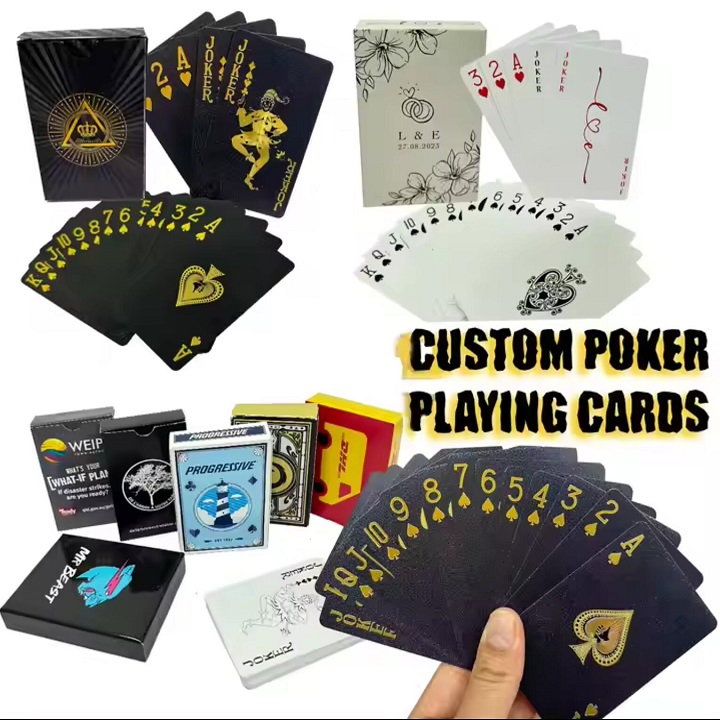
The standard playing card size most buyers, game publishers, and custom card manufacturers mean is poker size: 2.5 × 3.5 inches, or 63.5 × 88.9 mm. It is the familiar format used for poker decks, casino-style cards, branded promotional decks, magic cards, and many retail card games. However, "standard" is not a universal legal specification: bridge size, tarot size, and fully custom formats are also widely used, so the correct choice depends on the game, artwork, player experience, packaging, and market. [customprintedpaper]
For brands developing a custom deck, choosing the card size is not simply a design decision. It affects how comfortably people shuffle, how much information fits on each card, the required tuck box dimensions, print layout, cutting tolerance, freight volume, and perceived product quality. At XingKun, we recommend confirming the final card format before artwork production begins, rather than adapting a finished design to a size later.
Standard Playing Card Size at a Glance
A standard poker-size playing card measures:
| Measurement | Standard Poker Card Size |
| Inches | 2.5 × 3.5 in |
| Millimetres | 63.5 × 88.9 mm |
| Centimetres | 6.35 × 8.89 cm |
| Aspect ratio | 5:7 |
| Common name | Poker size / wide size |
| Typical uses | Poker, blackjack, magic, promotional decks, classic card games, retail decks |
This 2.5 × 3.5-inch format is commonly treated as the default playing-card specification in North American retail and poker-related applications. It gives designers enough room for suit symbols, court-card illustrations, branded backs, instructions, and decorative borders while remaining comfortable for most adult hands. [customprintedpaper]
For a standard 52-card deck, manufacturers may also produce two jokers, a double-back card, an information card, or custom rule cards. These extra cards generally use the same finished dimensions as the main deck to ensure consistent shuffling, stacking, and packaging.
Why Poker Size Became the Default
Poker-size cards are slightly wider than bridge-size cards. That extra width may sound minor, but it creates meaningful practical differences:
- It offers more room for artwork, large indices, logos, and readable text.
- It supports more traditional-looking court-card layouts.
- It feels substantial in the hand for poker, blackjack, magic, and gifting.
- It works well for branded decks where visual storytelling matters.
- It fits a broad range of standard tuck-box and card-game packaging concepts.
For most OEM and ODM buyers, poker size is the safest first choice because players recognize it immediately and suppliers are accustomed to producing it. A custom deck using this format also has fewer compatibility issues with common accessories such as card sleeves, deck boxes, card holders, and display products.
Poker Size vs. Bridge Size
The most frequent source of confusion is the difference between poker-size playing cards and bridge-size playing cards. Both have the same height—3.5 inches or 88.9 mm—but bridge cards are narrower.
| Card format | Inches | Millimetres | Best suited for |
| Poker size | 2.5 × 3.5 in | 63.5 × 88.9 mm | Poker, casino-style decks, magic, branded card decks |
| Bridge size | 2.25 × 3.5 in | 57.15 × 88.9 mm | Bridge, rummy, games with large hands, compact decks |
| Mini cards | Varies; often around 1.75 × 2.5 in | Varies | Travel, novelty, children’s products, promotional inserts |
| Tarot cards | Commonly around 2.75 × 4.75 in | Around 70 × 120 mm | Tarot, oracle decks, spiritual and illustrated products |
| Oversized cards | Custom | Custom | Education, events, demonstrations, children’s activities |
Bridge cards measure 2.25 × 3.5 inches, compared with poker cards at 2.5 × 3.5 inches. In other words, bridge cards are one-quarter inch—or 6.35 mm—narrower while keeping the same height. [copagusa]
Which Is Better: Poker or Bridge Size?
Neither format is automatically better. The right option depends on the user and the card content.
Choose poker size when:
- Your deck includes detailed illustrations or premium artwork.
- You are creating poker, blackjack, casino-style, or magician-oriented cards.
- Your brand wants the most familiar mainstream deck format.
- You need more design space for storytelling, instructions, or larger imagery.
- You want a deck that feels premium in retail, gifting, or collector contexts.
Choose bridge size when:
- The game requires players to hold many cards at once.
- The audience includes users with smaller hands.
- Compact storage or lower material consumption is a priority.
- The card faces use a simple visual system with limited text or imagery.
- You are building a deck specifically for bridge, rummy, or similar card games.
A practical example: a strategy game in which players hold 10–15 cards may benefit from the narrower bridge format because the hand is easier to fan. By contrast, a premium illustrated poker deck with branded court cards will usually look stronger at poker size.
Is There a Worldwide Playing Card Standard?
The term "standard playing card size" is useful, but buyers should treat it as an industry convention, not a single global rule enforced across every country and game type.
Poker size—2.5 × 3.5 inches—is the most widely recognized standard for general-purpose decks, especially in North America. Bridge size is also an established format, and different categories follow their own conventions. Trading cards, flash cards, educational cards, tarot cards, board-game cards, and collectible cards often require different dimensions based on gameplay and content needs. [copagusa]
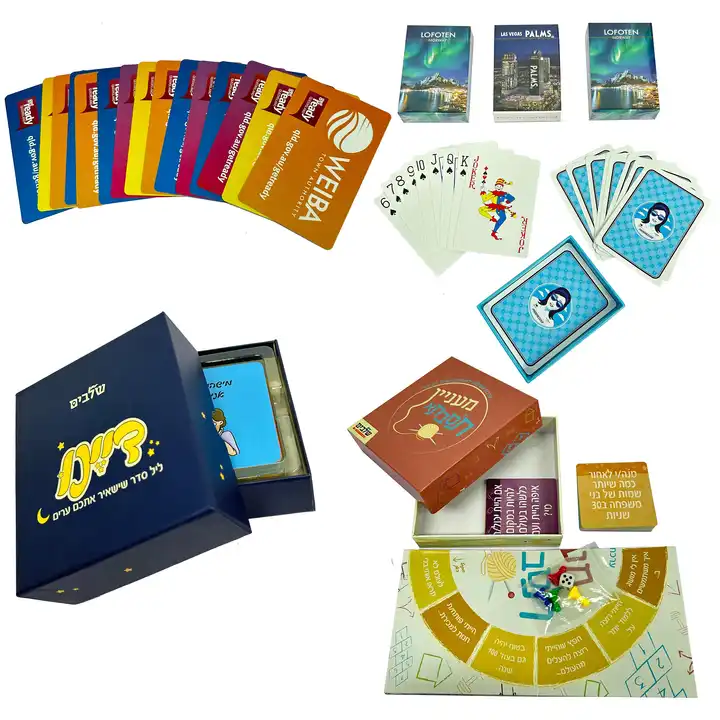
This distinction matters for international OEM buyers. A deck designed only around an assumed "standard" can create avoidable problems if the actual market expects a different format. Before a manufacturer creates a die-line or print proof, define:
1. The finished card width and height
2. Corner radius
3. Card stock and thickness
4. Surface finish
5. Number of cards per deck
6. Box structure and internal fit
7. Primary market and expected player use
8. Whether sleeves, inserts, or third-party accessories must fit
This specification-first approach reduces revision time, protects the intended user experience, and helps prevent a beautiful card deck from becoming difficult to shuffle or package.
Standard Card Size for Printing
A finished size is not the same as a print-artwork size. When preparing custom playing-card files, designers must add bleed around the finished trim line. Bleed is the extra artwork area printed beyond the final edge and trimmed away during production.
For a poker-size card with a finished size of 63.5 × 88.9 mm, a common artwork setup includes 3 mm bleed on all four sides:
| Artwork element | Example poker-card specification |
| Finished card size | 63.5 × 88.9 mm |
| Bleed | 3 mm on each edge |
| Full artwork size with bleed | 69.5 × 94.9 mm |
| Recommended safe area | Keep key text and logos at least 3 mm inside the trim line |
| Resolution | 300 DPI for raster artwork |
| Preferred file types | AI, PDF, PSD, EPS, or high-resolution TIFF |
The full artwork dimensions in this example are calculated by adding 6 mm to each finished dimension: \(63.5 + 6 = 69.5\) mm wide and \(88.9 + 6 = 94.9\) mm high.
Why Bleed and Safe Areas Matter
A card may shift slightly during trimming, even when manufactured with professional cutting equipment. If a border, logo, face, or line of text sits too close to the edge, the final result can appear uneven or accidentally cropped.
To avoid common custom playing-card printing problems:
- Extend background colours, patterns, and full-bleed artwork beyond the trim line.
- Keep faces, indices, logos, QR codes, and critical text inside the safe area.
- Avoid very thin borders unless the design intentionally accepts small visual variation.
- Use vector files for logos, fine linework, and typography whenever possible.
- Review the final production proof at actual size before approval.
- Check that front and back artwork align properly with your selected card orientation.
For decks with white borders, precise centering deserves extra attention. A slightly off-centre cut is often more noticeable on a white-bordered card back than on a full-bleed illustration.
How Card Size Affects Deck Usability
The best playing-card dimensions combine readability, handling, gameplay, and production practicality. A deck can be visually impressive but frustrating to use if the cards are too large, too narrow, too thin, or too crowded with information.
Hand Feel and Shuffling
Poker-size cards provide a balanced grip for many adult users. They are wide enough to feel substantial and accommodate artwork, but not so wide that they become difficult to shuffle for most players.
Bridge-size cards offer a narrower grip, which can be helpful for players holding larger hands of cards. This is one reason the format remains relevant for games where fanning and hand management are central to gameplay.
Text and Icon Readability
When a game card includes rules text, resource icons, abilities, statistics, or educational information, size must be evaluated alongside typography.
A useful design principle is simple: do not select a smaller card size solely to reduce cost if it forces text below a comfortable reading size. Smaller cards can reduce paper usage and carton volume, but poor readability may reduce customer satisfaction, increase support issues, and harm repeat purchase potential.
For educational flash cards, language-learning cards, and children's products, a larger custom format may be better than standard poker size. The primary objective is often visual clarity, not casino-style handling.
Packaging Fit
Your packaging should be engineered around the final deck, not guessed from a generic box template. The internal dimensions must account for:
- The finished width and height of each card
- The deck's total thickness
- Coating or lamination thickness
- Number of cards
- Inserts, guidebooks, or promotional cards
- Shrink-wrap or sealing method
- Tolerance needed for smooth insertion and removal
A 54-card poker deck and a 120-card strategy-game deck can use the same card size but need very different tuck-box depths. This is why card and packaging planning should happen together.
Choosing the Right Size for a Custom Deck
Before requesting a quotation, use the following decision process.
Step 1: Define the Main Use
Start with the function of the deck:
- Poker, blackjack, casino promotion: choose poker size unless a specific market requires another format.
- Bridge or games with large card hands: consider bridge size.
- Tarot and oracle products: consider a taller custom tarot format.
- Board games: choose the size based on text volume, iconography, and table space.
- Education and flash cards: prioritize reading distance, child usability, and storage.
- Luxury gifting and collector products: choose the format that supports the artwork and packaging story.
Step 2: Map the Content to the Format
Ask how much must appear on one card. A card containing a character illustration, title, effect text, icons, flavour text, rarity mark, and brand logo needs more usable space than a simple playing-card face.
When content is dense, you have three options:
1. Increase the card size.
2. Simplify the content hierarchy.
3. Move non-essential instructions to a rulebook, insert, QR-linked guide, or companion app.
The best choice depends on the target user. A family game may need larger type and clearer icons. A collector deck may prioritize art and premium finishes. A professional training deck may require readable diagrams and structured learning prompts.
Step 3: Select Stock and Finish
Size alone does not determine a card's quality. Buyers should also specify the material and surface treatment.
Common considerations include:
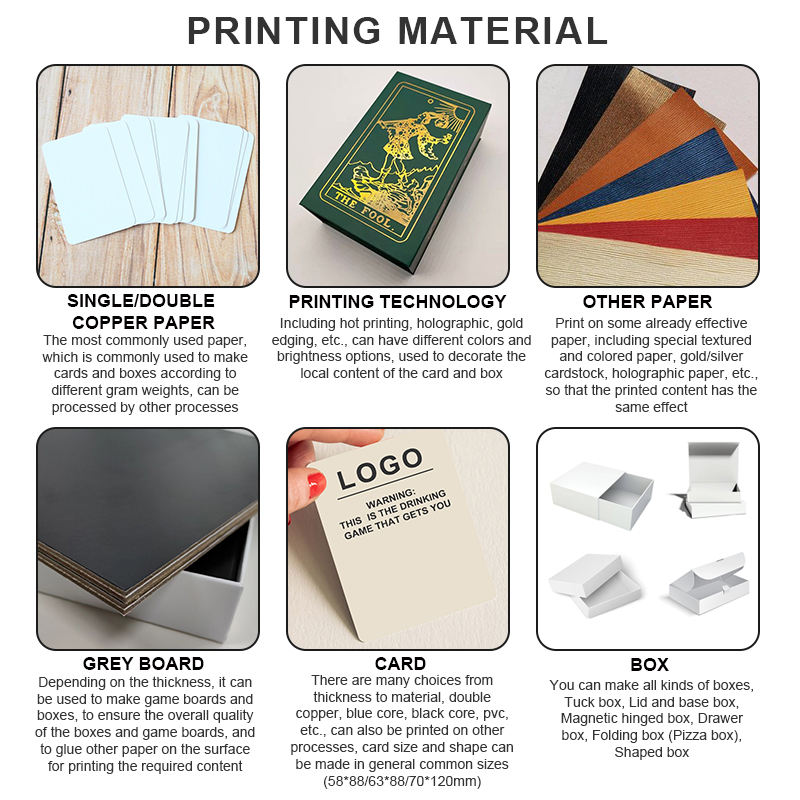
- Paper card stock: Suitable for many playing cards, game cards, promotional decks, and educational products.
- Black-core or blue-core stock: Often selected when stronger opacity and reduced show-through are required.
- Linen finish: Adds a textured feel often associated with traditional playing cards.
- Smooth finish: Supports sharp imagery and a clean modern appearance.
- Matte lamination: Reduces glare and offers a soft premium effect.
- Gloss lamination: Can make colours appear more vivid, although it may show fingerprints more readily.
- PVC cards: Can improve water resistance and durability for selected applications, though they create different sustainability and recycling considerations.
The most appropriate stock-and-finish combination should be evaluated with physical samples. Digital artwork cannot fully show shuffle performance, stiffness, surface friction, colour appearance, or how a deck feels after repeated use.
Manufacturer's Quality Checklist
From a manufacturing perspective, a high-quality custom deck requires more than correct dimensions. At XingKun, a thorough pre-production and quality-control process should verify the full specification—not merely whether the cards are 63.5 × 88.9 mm.
Essential Checks Before Mass Production
- Confirm the approved finished size and die-line.
- Verify bleed, safe area, and cut marks in the final artwork.
- Check spelling, legal text, barcodes, copyright marks, and card numbering.
- Confirm front/back orientation and the position of double-sided cards.
- Approve colour expectations, ideally using a physical proof or defined colour standard.
- Test whether card backs align consistently in a stacked deck.
- Confirm corner shape and corner radius.
- Inspect the tuck box or rigid box for correct deck fit.
- Verify whether the deck needs shrink wrapping, sealing labels, cello wrapping, or inserts.
- Define acceptable quality tolerances before mass production.
Common Mistakes to Avoid
The most common issue is not selecting the wrong "standard" size. It is failing to connect card size to the deck's real-world use.
Avoid these costly mistakes:
- Assuming poker size is correct for every game category.
- Designing borders too close to the trim edge.
- Using text that becomes difficult to read after printing.
- Forgetting that additional cards increase box depth.
- Choosing a glossy finish without considering fingerprint visibility.
- Ordering card sleeves before confirming the final finished dimensions.
- Approving artwork without checking the manufacturer's die-line.
- Treating the tuck box as an afterthought rather than part of the product experience.
A successful custom deck should feel intentional from the first card drawn to the moment it is returned to its box.
Custom Playing Cards for Brands
Custom playing cards can serve much more than traditional card games. For brands, publishers, agencies, retailers, schools, and creators, they can become a practical printed product with long-term engagement value.
Common commercial applications include:
- Branded poker decks for hospitality, travel, sports, and corporate gifts
- Promotional card sets for product launches and events
- Custom board-game cards for publishers and independent game creators
- Flash cards for education, language learning, and workplace training
- Tarot and oracle decks for artists, spiritual brands, and specialty retail
- Collectible cards for fan communities and product campaigns
- Loyalty, gift, or membership cards
- Instruction cards, product-care cards, and retail inserts
XingKun provides custom playing-card manufacturing for OEM and ODM buyers, including card-size customization, artwork support, material selection, printing, finishing, die-cutting, quality inspection, and complementary packaging. The company's product range also covers poker cards, tarot cards, game cards, flash cards, board-game cards, and related custom printed products. [xkdisplay]
Request a Custom Playing Card Quote
If you are planning a custom deck, start with a clear specification: intended card size, quantity, card count, artwork style, preferred material, finish, packaging type, and delivery market.
Need help choosing between poker size, bridge size, or a fully custom format? Send XingKun your deck concept or artwork file. Our team can help evaluate the card dimensions, print setup, card stock, finishing options, and packaging structure before production begins. Explore our [custom playing card manufacturing services] to discuss an OEM or ODM project. [xkdisplay]
Conclusion
The answer to "What is the standard playing card size?" is usually 2.5 × 3.5 inches (63.5 × 88.9 mm), known as poker size. It remains the most recognized and versatile format for poker decks, promotional cards, magic decks, classic games, and many custom retail products. [customprintedpaper]
Still, the best card size is the one that supports your users and your product purpose. Bridge size can be easier to hold in large hands of cards. Tarot formats give artwork more visual impact. Educational and game cards may need custom dimensions for clearer reading and better gameplay. Before printing, define the finished size, bleed, safe area, materials, finish, card count, and packaging together. This creates a deck that looks professional, performs reliably, and delivers a stronger brand experience.

FAQ
1. What is the standard poker card size in millimetres?
A standard poker-size playing card is 63.5 × 88.9 mm. This equals 2.5 × 3.5 inches and is the most common format for poker decks, casino-style cards, magic decks, and many custom playing-card projects. [customprintedpaper]
2. What is the difference between poker-size and bridge-size playing cards?
Poker cards are 2.5 × 3.5 inches, while bridge cards are 2.25 × 3.5 inches. Both are the same height, but bridge cards are 0.25 inch—or 6.35 mm—narrower, making them easier to hold when players have larger hands of cards. [copagusa]
3. What size should I use for custom game cards?
Use poker size for general card games with moderate artwork and text. Select bridge size for games where players hold many cards. Choose a larger custom size when the cards need substantial rules text, diagrams, educational content, or detailed artwork. Test a physical sample before committing to production.
4. How much bleed should I add to a playing-card design?
A common setup is 3 mm bleed on every side. For a finished poker-size card of 63.5 × 88.9 mm, this produces an artwork file of approximately 69.5 × 94.9 mm including bleed. Always confirm the exact die-line and bleed requirement with your printer before final export.
5. What is the best material for custom playing cards?
The best material depends on use. Quality paper card stock suits most decks, while black-core or blue-core stock can improve opacity for premium playing cards. Linen or smooth finishes influence handling and appearance, and PVC may be appropriate for water-resistant applications. Request samples to compare feel, durability, colour, and shuffle performance.
6. Can I create a custom playing-card size?
Yes. Custom card dimensions are widely used for tarot, oracle decks, board games, learning cards, promotional products, and collector sets. A manufacturer can create a suitable die-line and packaging structure once the intended size, corner treatment, stock, card count, and box style are confirmed.
7. What size box is needed for a standard playing-card deck?
The box must be designed around the final deck thickness, not only the card face size. A standard poker deck needs internal width and height slightly larger than 63.5 × 88.9 mm, plus sufficient depth for the total number of cards, stock thickness, coating, inserts, and wrapping. Ask your manufacturer to provide a fitted tuck-box die-line after the deck specification is finalized.
References
1. XingKun. "[Custom Playing Cards, Game Cards Manufacturer]." Product and service overview for custom poker cards, tarot cards, board-game cards, flash cards, manufacturing processes, materials, and printing options. [xkdisplay]
2. Custom Printed Paper. "[Playing Card Dimensions: The Complete Size Guide]." Reference for the commonly used poker-card dimension of 2.5 × 3.5 inches or 63.5 × 88.9 mm. [customprintedpaper]
3. COPAG USA. "[What Is the Difference Between Bridge vs Poker Cards?]." Reference for poker size at 2.5 × 3.5 inches and bridge size at 2.25 × 3.5 inches. [copagusa]
4. Mr Playing Card. "[Playing Card Sizes Guide: Poker, Bridge, Oracle, Jumbo]." Comparison of common playing-card formats and their typical uses. [mrplayingcard]
5. Adobe. "[A7 Format: A7 Paper Size and Uses]." Reference for comparison with A7 paper dimensions of 74 × 105 mm; A7 is not the same as standard poker-card size. [adobe]
6. Neenah Paper. "[A-Series Paper Size Dimensions]." Additional reference for A7 dimensions and international paper-format comparison. [neenahpaper]


